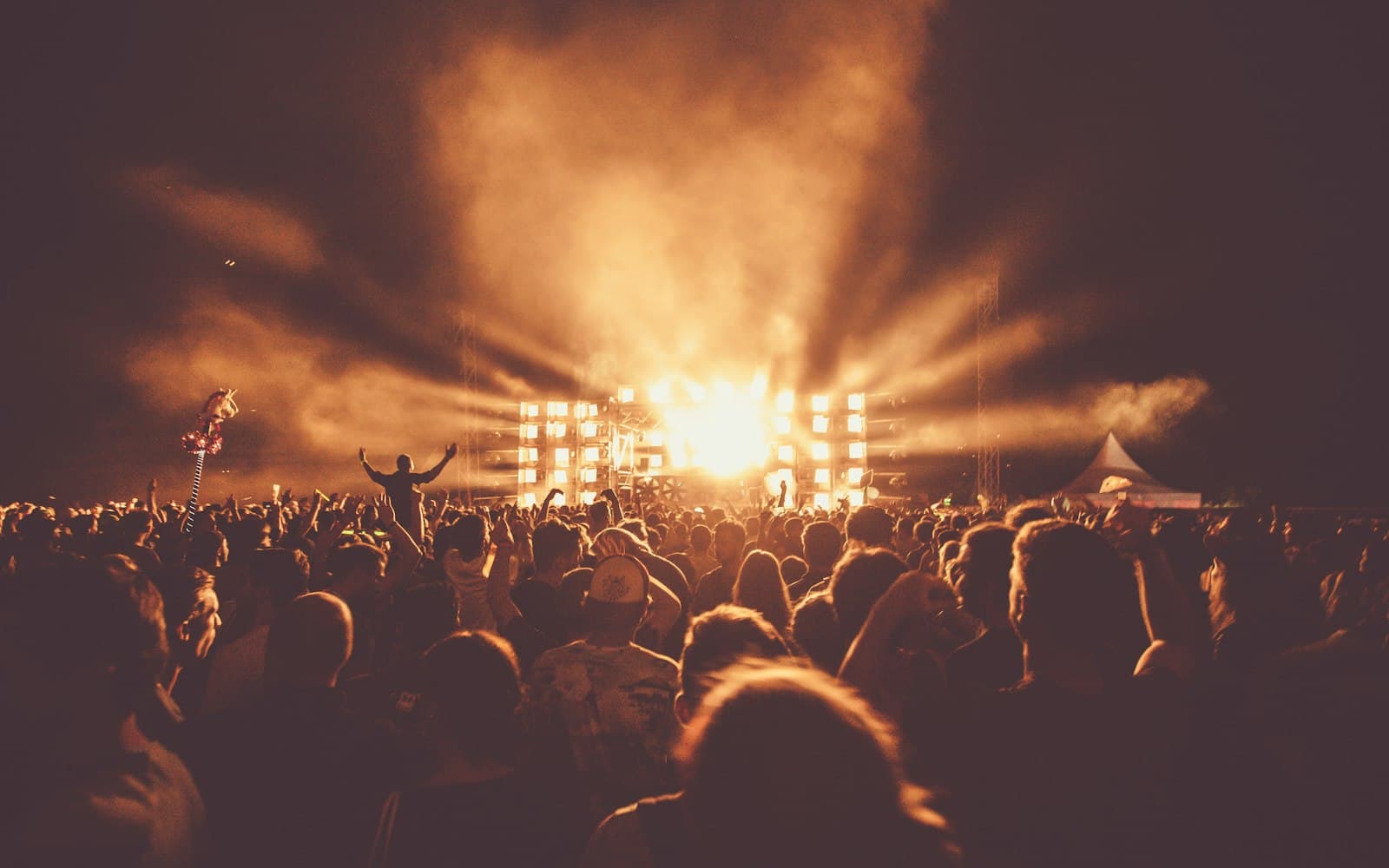
An outdoor wedding, festival, or corporate reception in Tampa Bay has a specific kind of magic: the sunset over the water, the breeze through a live oak, string lights that come up as the sky goes down. It also has a specific kind of difficulty. Florida weather is not New England weather, and the lighting and AV designs that work in a climate‑controlled ballroom will not survive a July evening on Davis Islands.
What follows is what we brief every production team about when the event moves outside.
The four weather variables that actually matter
In production, weather risk reduces to four factors. Plan for them specifically and the rest falls into place.
Afternoon thunderstorms
From roughly May through early October, Tampa Bay gets a near‑daily window of heavy rain between two and six in the afternoon. It is rarely all day; it is often thirty to ninety minutes, and the window moves. Every outdoor event inside that season should be built around the assumption that at least one thunderstorm will pass through. That means tenting, generator placement with lightning in mind, cable runs elevated or routed under structure, and a defined rain call with the client before the day begins.
Humidity and salt air
Humidity is not just comfort. It fogs lenses, condenses on cooled projectors, and shortens the life of any electronics not rated for outdoor use. Coastal venues add salt air to the mix. Gear that has spent a weekend on Clearwater Beach is never the same gear again unless it was the right gear to begin with. IP‑rated fixtures (intelligent lighting rated for outdoor deployment) are not optional at the waterfront; they are the spec.
Heat
Load‑in on a summer afternoon at a Tampa Bay outdoor venue can easily run over ninety‑five degrees on the deck. That matters for crew safety, for gear that overheats and throttles, and for power draw on air‑cooled amplification. Start loads earlier, schedule shade, carry more ice and water than you think you need, and over‑provision power so systems aren't on the edge when the sun is on them.
Sunset and daylight
An outdoor lighting design has to work in three different rooms over the course of a single evening: full sun, golden hour, and full dark. A rig that looks gorgeous at 10 p.m. can be invisible at 7 p.m. Conversely, a rig balanced for daylight can feel stark after dark. Real outdoor lighting design treats the sunset window as its own programming cue.
Lighting specs that hold up outside
The fixtures that survive Florida outdoor events share a short list of traits.
- IP65 or better. This is the standard rating for weatherproof intelligent fixtures. It means the unit is dust‑tight and can handle low‑pressure water jets from any direction. IP54 is not enough.
- LED over conventional. LED fixtures run cooler, draw less power, and tolerate humidity better than tungsten. They also hold color better as voltage fluctuates on a generator.
- Road‑cased rigging. Trussing, cabling, and DMX runs outdoors need to be elevated, routed, and secured against wind load. A loose truss leg on a windy waterfront is how production becomes liability.
- Atmospheric haze: strategic, not constant. Haze outdoors disperses almost immediately in any breeze. Use it in sheltered areas (under a tent, in a structure) and program around windier zones.
Audio outside behaves differently
Sound does not reflect off walls outside. Without those reflections, a PA that sounds full indoors can sound thin on a patio. Bass in particular is lost to the open air. Outdoor sound design compensates with:
- Larger subwoofer arrays (usually paired, sometimes flown) to project low end across a lawn.
- Line arrays or delay speakers for any venue deeper than about sixty feet. A single speaker cluster at the stage covers the first rows well and dies by the middle of the lawn.
- Wind management on wireless microphones. Foam windscreens aren't decorative, they're the reason your officiant isn't inaudible.
- A real conversation with the venue about sound ordinances. Waterfront and residential‑adjacent venues in Pinellas and Hillsborough counties often carry decibel caps; design the system knowing the ceiling.
Power is half the production
Outdoor events do not always have the power to support the production they want. A fifteen‑piece wedding band with a full lighting rig can draw more than a beachside venue's outdoor circuit will give you. That gap is filled by generators, and generators bring their own considerations: fuel, noise, placement, and cable runs.
Two rules we always follow:
- Isolate audio from dimmer circuits. Sharing power between a PA and a lighting dimmer is the fastest way to introduce hum into a line. Audio gets its own circuit or its own generator.
- Generators go where the sound won't carry. A noisy generator fifty feet from a ceremony aisle is a disaster. Whisper‑rated, sound‑attenuated units exist; they cost more, and they earn every dollar.
The rain call: the conversation nobody wants to have
Every outdoor event in Florida needs a written rain plan. It is not a sign of doubt; it is a sign that the producer has been through this before. The rain plan should cover:
- The decision point: what time the final call is made, and who makes it. Usually the planner and the client together, no later than six hours before guest arrival.
- The backup space (tent, indoor room, or covered patio) and what changes about the production scope when it is deployed.
- Load‑in changes if the call shifts from outdoors to indoors or vice versa mid‑day.
- Communication to the band, DJ, staff, and vendors so nobody is setting up in a space that's about to flip.
Working with a production team that has done it before
Tampa Bay outdoor events reward local experience. A production team that has loaded into the same waterfront lawns, the same downtown rooftops, and the same tented estates knows where the power taps are, where the caterer stages, where the sun will be at seven, and where the breeze will pick up when the tide turns. That institutional memory saves hours.
If you're planning an outdoor event and want production designed around the weather rather than in spite of it, share the date, venue, and scope. Email Booking@bookmusicbureau.com, call (813) 616‑1707, or send us your brief. We will respond promptly.