“Full‑service event production” is a phrase that gets used loosely. For one vendor it means a mixer, a pair of speakers, and a hand on the faders. For another it means trucks, crews, rig plots, rehearsal days, and a production manager on comms from load‑in to load‑out. The gap between those two versions of the same phrase is where events go sideways.
We've been on both sides of that gap for long enough to know exactly where the seams are. If you are evaluating a production partner, not just booking a band, this is what you should expect the words to cover.
Audio: the unglamorous foundation
Sound is the first thing to fail and the last thing most guests remember. They only notice when it's wrong. A full‑service audio scope typically includes:
- A venue walk and acoustic assessment. Rooms lie. Ceiling materials, wall reflections, HVAC noise, and guest load all change how a PA behaves once the room is full.
- A system design that matches the room and the program: main line arrays or point‑source mains, delay speakers for deep rooms, a subwoofer strategy, monitors for the stage, and front‑fills for the first rows.
- An audio engineer at front of house and, for larger productions, a dedicated monitor engineer on stage. The engineer is not the same person running the laptop. That's a different job.
- Wired and wireless microphones, with a coordinated RF plan so that a ceremony mic, a speaker mic, and the band's eight channels don't step on each other.
- Recording of key moments (speeches, toasts, a signature performance) when requested.
Lighting: designing the room guests walk into
Lighting does three jobs at once: it makes the room beautiful on arrival, it makes the stage readable during the program, and it shifts the emotional register as the evening moves. Full‑service lighting means all three are intentional.
On a typical Tampa Bay wedding or corporate evening, that breaks down into:
- Ambient and architectural lighting: uplights along walls, pin‑spots on centerpieces, gobos projecting patterns or a client monogram on the dance floor or walls, and warm washes that make linens and florals photograph the way they look.
- Performance lighting: intelligent fixtures (moving heads, beams, spots) focused on the stage for the band or DJ, with a lighting programmer or LD (lighting director) cueing them to the music.
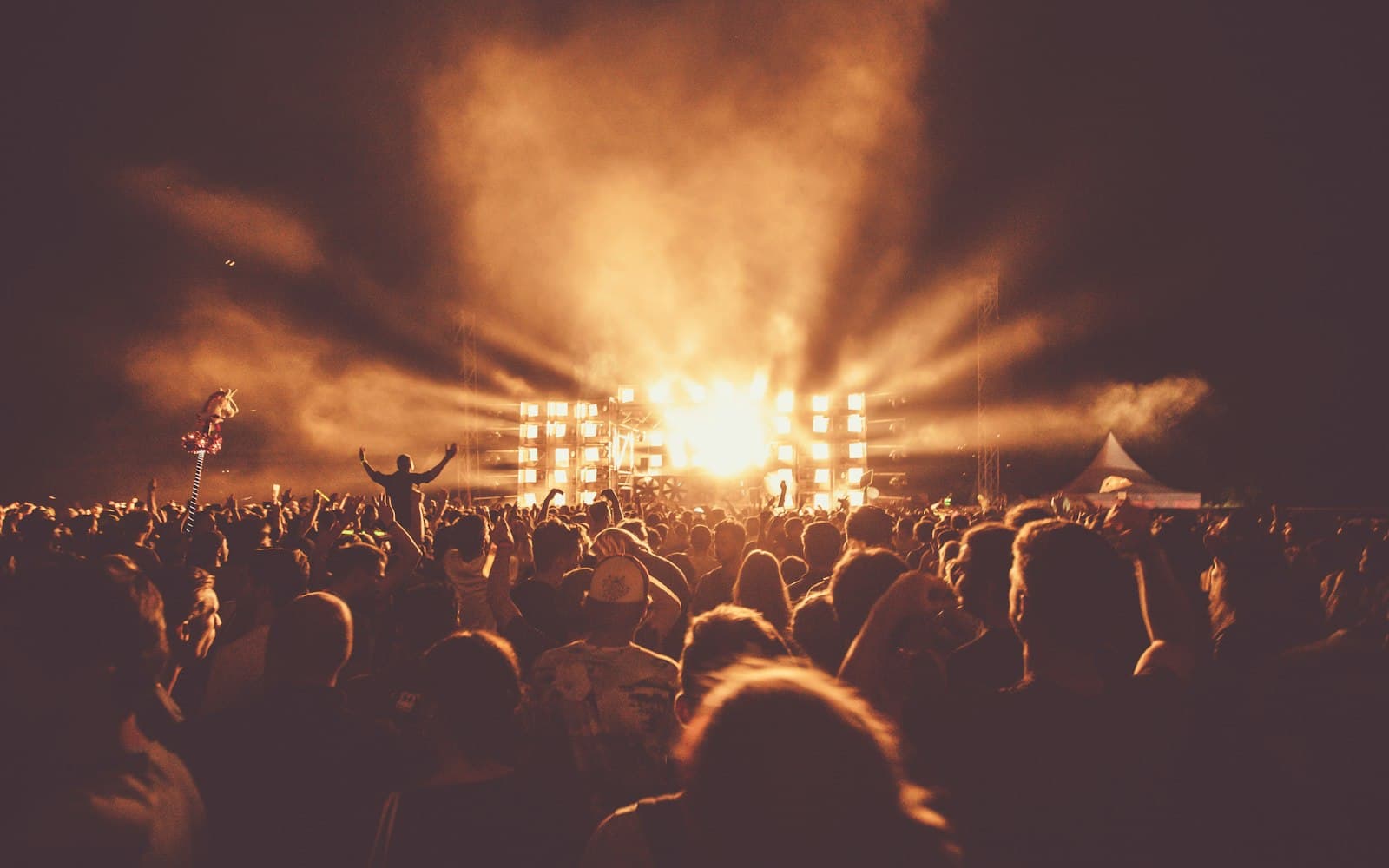
- Scenic lighting: LED walls, custom gobos, laser arrays, and atmospheric haze when the production calls for it. Haze is what makes beams visible; a room without it looks flat even with thousands of dollars of fixtures.
The line between good lighting and great lighting is almost always the designer, not the gear. A full‑service partner walks the room, sketches a plot, renders it for client approval, and programs it before the doors open.
Staging: the invisible architecture
Staging is the piece most couples and corporate planners underestimate, until they realize a band doesn't fit on the platform the venue set up, or the downstage lip is too shallow for a lighting truss, or the view from the back of the room is blocked by a column.
A full‑service production scope includes:
- Stage decking sized to the act. A solo musician's 4' × 8' riser is a different world from a six‑piece band on a 16' × 24' deck with a drum riser.
- Full stages when the performance demands them: SL series decks, custom skirting, stairs, and ADA ramps where required.
- Truss and rigging for lighting and audio, engineered to the venue's load limits and inspected before doors.
- Backline: drums, amps, keys, and backup instruments staged and tested before the first note of sound check.
Site operations: the most important role nobody talks about
Site ops is where production crosses over into event management. It's the production manager on comms; the runner driving forgotten gear back from the warehouse; the stagehand who re‑spikes the dance floor at 8:30 after the tables are cleared; the coordinator on headset with the planner, the venue, the caterer, and the bandleader at once.
On a well‑run evening, guests never meet the site operations team. They just notice that the room turned over in fifteen minutes, speeches started on time, and the band came on the second the plates cleared. That is not luck. It is a schedule, a run‑of‑show, a pre‑production meeting, and a crew who have done it before.
The pieces that show up only on bigger events
Not every wedding needs cold sparks. Not every corporate activation needs a laser array. But when a production is designed to create a moment (a first dance with a spark curtain, a brand launch that opens with lasers across the ceiling), those elements live inside the same scope. At the Music Bureau we include LED boards, intelligent lighting, lasers, CO2 cannons, cold sparks, power generators, backline, decor, and coordination across a single team so the design remains coherent instead of franken‑assembled from four vendors.
What a full-service partnership removes from your plate
When a production partner is truly full‑service, the planner's day shrinks. You are not coordinating four vendors. You are not triangulating between the lighting company, the audio company, the band, and the venue about stage placement. You are not the one answering whether the generator can sit behind the tent without the noise bleeding into the ceremony.
Those conversations still happen. They just happen inside our team, and the output that reaches the client is one schedule, one budget, one contact. That's the actual value: fewer moving parts for you, more cohesion for the evening.
How to brief a production partner well
The best briefs we get include: the venue address and layout, the agenda by the hour, the head count, the act(s) already booked or being considered, the desired aesthetic (moodboard or reference events if you have them), and any non‑negotiables. Everything else we can figure out.
If you're still scoping (wedding, corporate, festival) and want an honest read on what production your evening actually needs, get in touch. Email Booking@bookmusicbureau.com or review our event production capabilities and send us your brief.