Walk into a wedding or a private party that is working, and the first thing you feel is not a song you recognize. It is a mood. The room has a temperature to it, an emotional weather, and music is the largest single lever anyone has over that weather. Most hosts think about music as a list of songs they like. The hosts whose events people talk about for years think about it as a tool for setting how the room feels at every point in the night.
That is what custom playlist curation for events actually does. It is less about the songs and more about the feeling each stretch of the evening is meant to create, and how the music gets a room from one feeling to the next without anyone noticing the steering. This guide is about the mood side of the equation: what it is, why a tailored program beats a streaming playlist, and how it plays out differently at a wedding versus a private party.
Mood, not just music: what curation is really for
Every gathering moves through emotional registers. There is the soft, slightly nervous warmth of guests arriving and looking for someone they know. There is the easy, conversational lull of dinner. There is the lift when the night turns from sitting to dancing, and the satisfied, sometimes tender wind-down at the end. Each of those registers has a sound. Custom curation is the work of matching the music to the feeling you want in the room at that exact moment, rather than letting a shuffled list impose a feeling of its own.
Music does this so well because it bypasses the part of us that thinks and goes straight to the part that feels. A familiar opening chord can put a whole room in a particular year of their lives. A slow build can make a crowd lean forward without knowing why. That connection between sound and emotion is the oldest one we have, and a well-curated event treats it as a design material, the same way a planner treats lighting or florals. Get it right and the music does not sit on top of the night; it becomes the night's mood.
Why a tailored program beats a streaming playlist
Anyone can build a playlist in a streaming app, and for a backyard hang that is often plenty. The gap shows up the moment a room has an arc to honor. A streaming playlist does not know that the toast just landed, that the dance floor is half full and wavering, or that the energy needs to drop gently for the last ten minutes rather than cut off. It cannot read faces. Custom curation, whether it is delivered by a DJ reading the floor in real time or a program built song by song ahead of the date, is built to respond to the actual room.
Tailoring also means the music carries the personality of the people it is for. A playlist pulled off the internet reflects an algorithm's idea of a genre. A curated program reflects the couple, the guest of honor, or the host: the songs that mean something, the cultural threads in the room, the eras the guest list actually grew up in, and just as importantly the songs to keep out. The do-not-play list is often more telling than the must-play list, because it protects the mood from a single track that can empty a floor.
If you want the deeper mechanics of how a program is built, the pacing, the transitions, the way energy is engineered across a night, our companion piece on professional music programming goes inside the craft. This post stays on the mood: what you are trying to make people feel, and when.
Setting the mood at a wedding
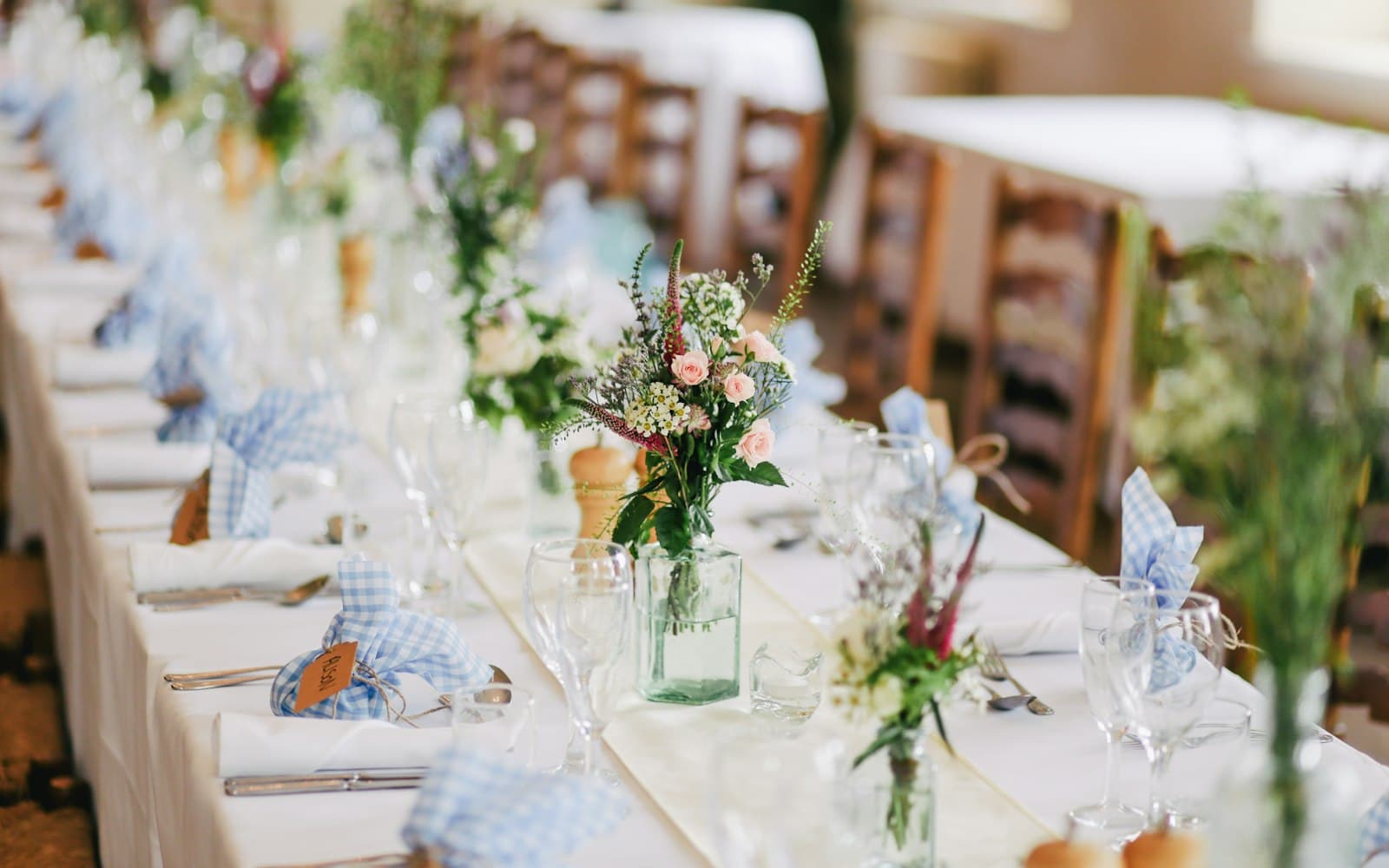
A wedding is an emotional marathon with a very specific shape, and the curation has to honor that shape rather than fight it. The mood is supposed to travel a long way over a few hours, from reverent to joyful to celebratory to bittersweet, and the music is what makes that travel feel intentional instead of abrupt.
- Ceremony and arrival: The goal is reverence and warmth. Music here is almost entirely emotional, not energetic. Instrumental pieces, a solo musician on guitar or strings, and familiar melodies played softly set a mood of anticipation without demanding attention.
- Cocktail hour: The mood shifts to ease and conversation. The music should feel like good hospitality, present but never loud enough to make anyone lean in to be heard.
- Dinner: Supportive and unhurried. Dinner mood is about letting the room breathe and talk, with music that can duck gracefully under speeches and toasts and rise again after.
- The turn to dancing: The single most important mood change of the night. This is where curation either opens the floor or leaves it empty. The right sequence tells the room, in feeling rather than words, that the celebration has started.
- The send-off: The mood lands rather than collapses. A deliberate wind-down lets guests leave feeling full, not flat.
Around Tampa Bay and across Florida we see how much the cultural fabric of a wedding shapes the mood, too. A Latin celebration that weaves in bachata and reggaetón, a multigenerational guest list that needs to feel at home from grandparents to cousins: those are not add-ons to the mood, they are the mood. Curation is how all of it gets woven into one coherent feeling.
Setting the mood at a private party
A private party plays by looser rules and that is exactly why mood matters more, not less. There is no ceremony to anchor the emotional arc, so the music has to do more of the work of telling people what kind of night this is. The mood you are setting is really the answer to a question your guests are quietly asking when they walk in: is this a dinner, a celebration, or a proper party?
That answer changes the whole curation. A milestone birthday built around dancing through every era of the guest of honor's life wants a different mood from an intimate anniversary dinner where the music is a low, warm presence behind the conversation. A house-party-style night that should feel effortless and continuous wants a single sustained groove that never asks for attention but never lets the energy sag. The skill is deciding the feeling first, then building toward it, instead of pressing play and hoping the room finds its own mood.
For a fuller look at formats and options for these kinds of nights, our guide to private party entertainment covers how live music, DJs, and production fit together once you know the mood you are after.
How custom curation gets built
Good curation starts with listening, not with a song list. Before a single track is chosen, the questions worth answering are about feeling and people: What do you want the room to feel like when guests first walk in, and again at the height of the night? Who is actually in the room, and what eras and cultures do they carry? What are the few songs that have to be there, and the few that must never be? What is the venue itself like, since a waterfront patio at sunset and a historic ballroom start from different moods?
From there, the program is matched to whoever is performing. With a DJ, the curation is largely a live craft: you align on the mood and the arc, then trust them to read the floor and adjust on the next track. With a live band, the set list is tailored to your crowd, and the hours around it, arrival, the gaps between sets, the late stretch after the band wraps, are curated so the mood never drops in the seams. And for spaces that need a consistent feeling rather than a one-night arc, our playlist curation service builds ambient programs for hotels, resorts, restaurants, and venues that shift with the time of day. It is the same discipline, applied at a different tempo.
Common questions about playlist curation for events
What is playlist curation for an event?
It is the deliberate design of an event's music to set and move the mood through the night, rather than playing a fixed list of songs. It accounts for the guest list, the venue, the moments that matter, and the feeling you want at each stage, and it can be delivered live by a DJ, shaped into a band's set, or built as a programmed playlist ahead of time.
How is custom curation different from a Spotify playlist?
A streaming playlist is a static list with no awareness of the room. Custom curation is personalized to the people present and responsive to the night as it unfolds, so the music can lift, ease, and land in time with what is actually happening rather than running on shuffle.
How far ahead should we plan the music?
Earlier is better. The strongest programs come from hosts who share a moodboard or a rough playlist months out, because that tells us what you are imagining before anything is locked in. We respond promptly with a plan, so it is always worth starting the conversation even on a shorter timeline.
Do we still need this if we book a live band or DJ?
Yes, and they work best together. A great DJ is a real-time curator, and a band's set still needs to be tailored to your crowd and the moments around it. Curation is the thinking about mood and arc that makes whichever performer you book land the way you pictured.
Let's set the mood for your night
Whether you are planning a wedding, a milestone birthday, or an intimate dinner at home, the fastest way to a room that feels right is to start with the feeling and work backward. Tell us the date, the venue, the guest list, and the mood you are picturing, and we'll come back promptly with a plan, the right performer, and the curation to match. Every act we work with is pre-vetted for musicianship and professionalism, and we have been booking entertainment across Florida since 2020.
Reach us at Booking@bookmusicbureau.com or send us your event details.