Of every hour of your wedding day, the ceremony is the shortest, and it's the one your guests will remember most clearly. It's also where music does the most work with the fewest notes: one piece for the walk down the aisle, a few quiet minutes under the vows, and a recessional that tells everyone it's time to celebrate. Hiring the right wedding ceremony musicians in Tampa Bay means planning for all of that, plus the things couples rarely think about until the day itself: sea breeze, shade, power, and whether anyone past the third row can hear the vows.
This guide is for engaged couples planning a Tampa Bay wedding, whether you live here or are planning a beach wedding from out of state, and for the planners who work alongside you. We book pre-vetted ceremony musicians, bands, and DJs across Tampa, St. Petersburg, Clearwater, Sarasota, and the beaches. Here is how we help couples choose the ensemble, the music, and the setup.
What live wedding ceremony music covers, moment by moment
A ceremony set isn't one song. It's a short program with several distinct moments, and each one asks something different of your musicians.
| Moment | What the music does | What you decide |
|---|---|---|
| Prelude | Sets the tone while guests find their seats, usually for the 15 to 30 minutes before the start time | The mood: classical, acoustic pop, jazz, or songs that mean something to the two of you |
| Family seating | A change of piece signals that the ceremony is about to begin | Whether grandparents and parents get their own entrance music |
| Processional | Carries the wedding party down the aisle at a steady walking pace | One piece for the whole party, or a change partway through |
| Entrance | The musical peak. The musicians watch for a cue and land the piece as you reach the front | The song, and the moment in it you want as the doors open |
| Interlude | Soft music under a unity candle, sand ceremony, reading, or signing | Whether you have one, and roughly how long it lasts |
| Recessional | Upbeat and celebratory; the first note of the party | The song you walk out to |
| Postlude | Plays guests out toward cocktail hour | Whether the same musicians continue into cocktail hour |
Couples often ask how musicians time the processional so the music doesn't stop halfway down the aisle or keep going after everyone is in place. Experienced ceremony musicians work from a cue given by your planner or coordinator, repeat a section if the walk runs long, and finish at a natural phrase rather than mid-note. It's a skill worth asking about when you compare musicians, and it's one of the things we cover with your musicians during planning.
String quartet, guitarist, or pianist: choosing your ceremony ensemble
The ensemble sets the sound of your ceremony before anyone says a word. These are the ceremony formats we book, and where each one shines.
| Ensemble | The sound | Best for | Plan for |
|---|---|---|---|
| Solo violinist | Elegant; classical pieces or modern pop arrangements | Intimate ceremonies, gardens, courtyards | Shade, and light amplification outdoors |
| String trio or quartet | Full, classic, and cinematic | Larger guest counts, ballrooms, formal and church ceremonies | Armless chairs, a level surface, shade, and more setup space |
| Solo guitarist | Warm, relaxed, and personal | Beach, garden, and barn ceremonies | A small sound system for anything beyond a small group |
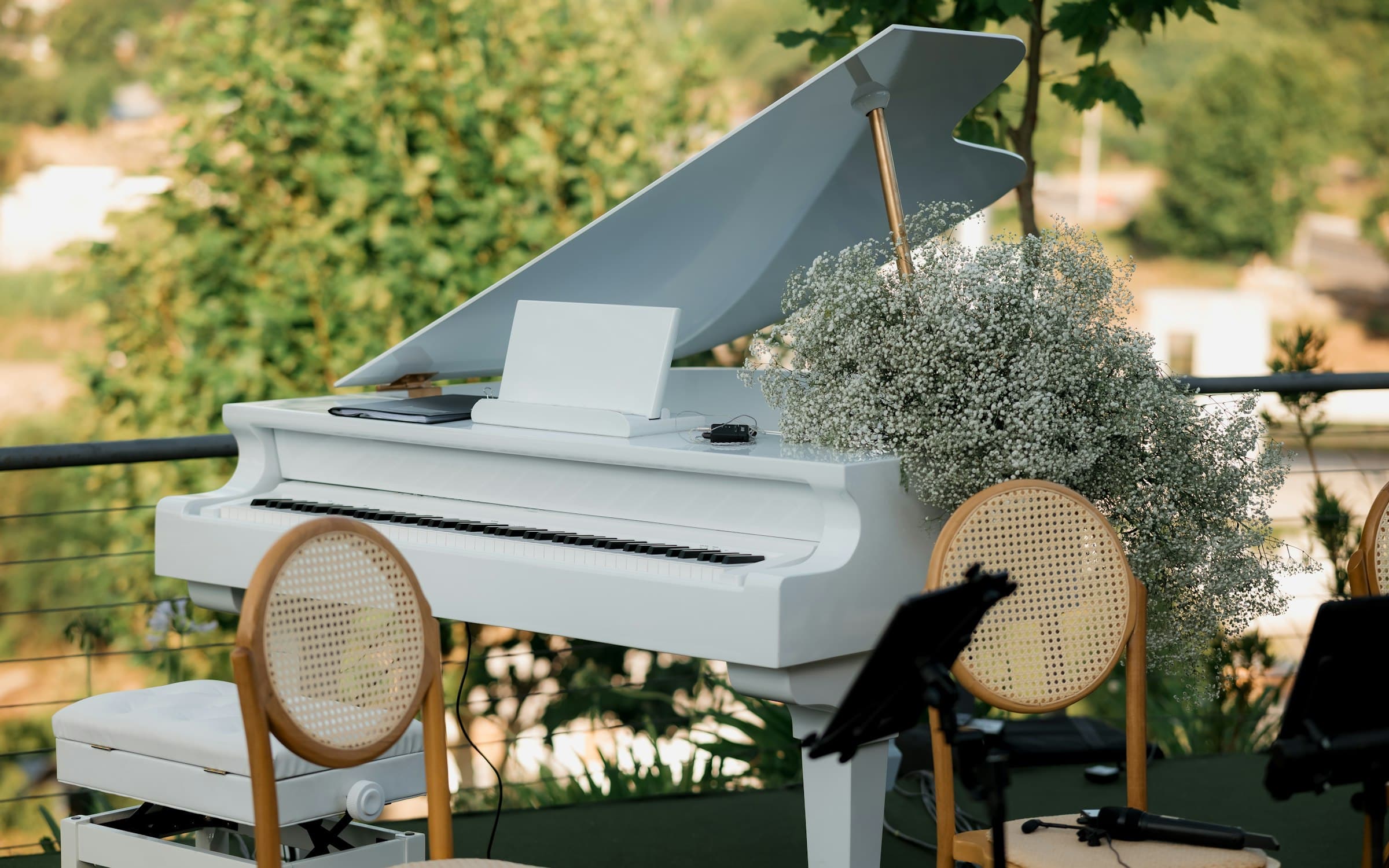
| Pianist | Timeless and versatile, from classical to contemporary | Ballrooms and venues with an in-house piano | A tuned venue piano, or a digital piano and power outdoors |
| Vocalist with acoustic accompaniment | The most personal: your song, with its words | Couples whose must-have song needs to be sung | Microphones and sound for both voice and instrument |
| Duo (such as violin and guitar, or vocals and keys) | Fuller than a soloist, lighter than a quartet | The middle ground for most budgets and sites | The needs of both instruments |
Three questions narrow the choice quickly: how many guests, what kind of site, and whether your most important song has lyrics. A soloist carries an intimate ceremony beautifully. A wide lawn of guests usually needs more players or light sound reinforcement. And if the song that matters most is one you want to hear sung, you need a vocalist, not a string arrangement.
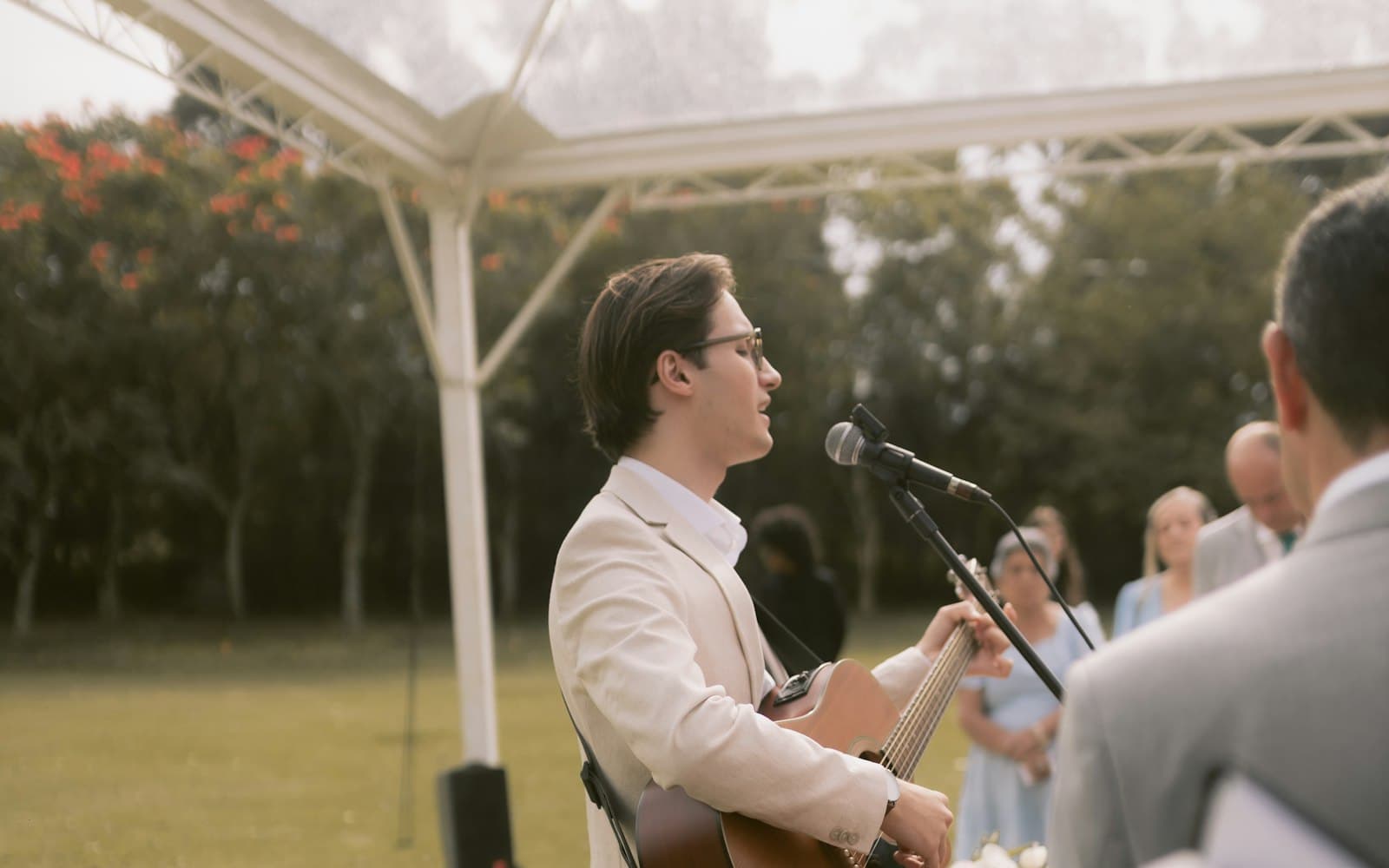
Our Tampa Bay musicians roster includes violinists, violists, guitarists, pianists, vocalists, and looping multi-instrumentalists, each with audio, video, and setlists on their page. To see how ceremony ensembles fit into the rest of the day, visit our wedding entertainment page.
Beach, garden, or ballroom: matching ceremony music to your Tampa Bay site
Tampa Bay gives couples an unusual range of ceremony settings within an hour's drive: Gulf beaches, waterfront lawns, garden estates, historic churches, and downtown ballrooms. The setting changes what your musicians need far more than most couples expect.
- Beaches (St. Pete Beach, Clearwater Beach, and the barrier islands). Wind is the main challenge. It carries sound away from guests and lifts sheet music off the stands. Plan on light amplification even for a soloist, clips for the music, a flat base so chairs and stands don't sink into the sand, and a power source: a nearby outlet, a battery-powered system, or a generator for larger setups. Many public beaches have rules about events and amplified sound, so confirm with your venue or the city before you plan around a speaker.
- Waterfront lawns and docks. Beautiful at sunset, but exposed. Sunset in Tampa Bay ranges from about 5:30 p.m. in early December to about 8:30 p.m. in late June, so your ceremony time, and the light your musicians will play in, shifts a lot by season.
- Garden estates and courtyards. Often the most forgiving outdoor sites, with some shelter from the wind, natural shade, and walls that help sound carry. Ask where the power is and how far musicians will carry gear from the loading area.
- Churches and chapels. Many have their own rules about which music is appropriate during the service and whether outside musicians may play or use the house organ or piano. Ask your officiant or the church's coordinator before you choose your processional.
- Hotel ballrooms and downtown venues. Climate controlled, acoustically predictable, and full of power outlets. The thing to watch is the room flip: if the ceremony and reception share a room, the musicians may need to pack up quickly so staff can reset.
- Historic and industrial spaces. Brick and hard surfaces, common in Ybor City and converted warehouses, make rooms bright and echoey. A single violin can sound gorgeous there, while a loud amplified setup can turn harsh.
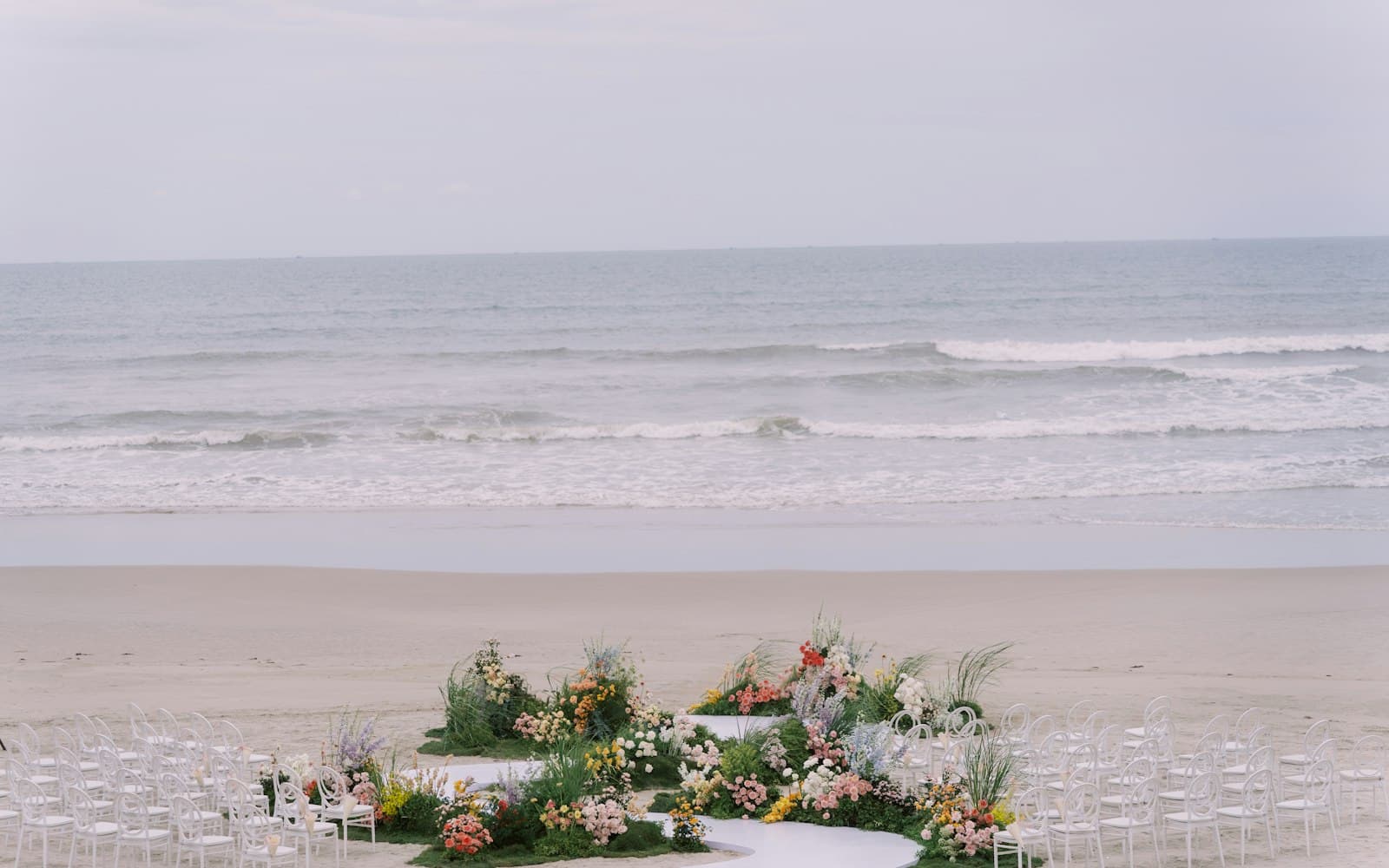
Our Tampa Bay venue guide goes deeper on how different rooms behave. If you're planning an outdoor ceremony between June and November, read our guide to outdoor lighting and AV in Florida weather for storm-season planning.
Ceremony sound: making sure every guest hears the vows
Ask anyone who has sat in the back row of an outdoor wedding. The most common ceremony problem has nothing to do with the music: it's not being able to hear the vows. Ceremony sound covers three things: microphones for the officiant and the two of you, microphones for readers or singers, and reinforcement for the musicians. A well-planned setup includes:
- A wireless lavalier microphone for the officiant, which also picks up your vows without anyone holding a mic between you.
- A handheld wireless microphone for readers and anyone giving a blessing.
- Microphones or pickups for the musicians, mixed so the music fills the space without overwhelming the front rows.
- Small speakers placed so the back rows hear clearly.
- Someone at the controls who knows the order of the ceremony, so microphones are live when someone speaks and muted when they aren't.
- A clean audio feed for your videographer, if they want one. Ask them early.
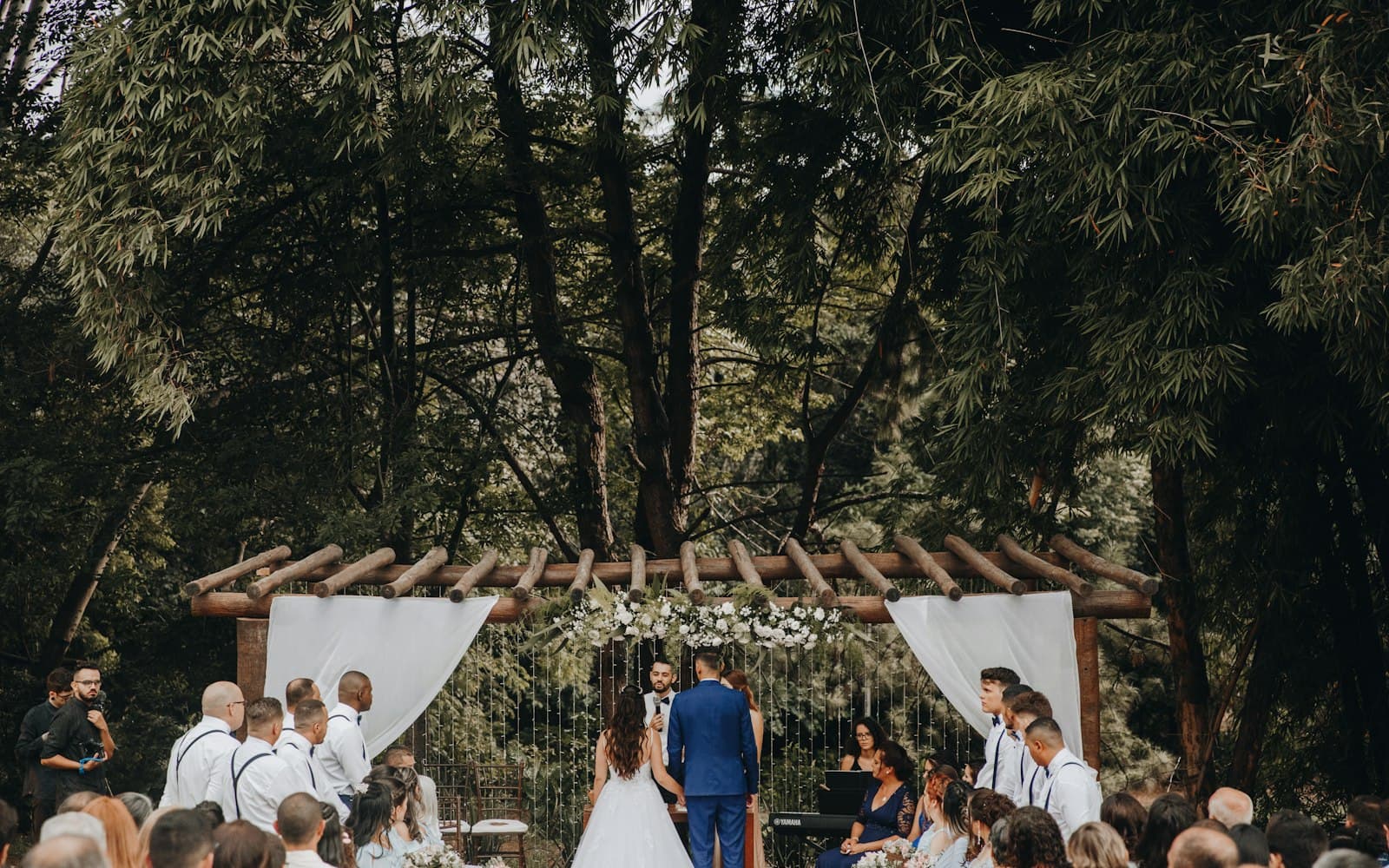
For smaller weddings, the musicians often bring this themselves. Most local bookings under a hundred guests are self-sufficient, with the artist providing their own sound. For larger ceremonies, beach sites, or a ceremony in a different spot from the reception, our event production team scopes a dedicated ceremony system, power, and on-site coordination. If a DJ is handling your reception, our Tampa wedding DJ guide explains how ceremony sound and the DJ's setup work together.
Choosing processional and recessional songs, and when to ask for a custom arrangement
Start with your entrance. It's the piece most guests will remember, and the one you'll hear again every time you watch your ceremony video. Then work outward to the recessional, the wedding party's processional, and the prelude.
- Classical standards still work for a reason. Pachelbel's Canon in D, Wagner's Bridal Chorus, Mendelssohn's Wedding March, and Bach's Air on the G String are timeless, and every trained string player knows them.
- Pop songs, arranged for your ensemble, are just as common now: a song from your first date or your favorite band, played on strings, piano, or guitar. Ask whether an arrangement already exists for the ensemble you're booking or needs to be written.
- Custom arrangements of your processional, recessional, or the one song you've been waiting on are part of what our ceremony ensembles offer. Give the musicians as much lead time as you can; a new arrangement takes time to write and rehearse.
- Cultural and faith traditions. Many Tampa Bay families bring more than one tradition to the ceremony. Tell us early if yours includes traditional music, a specific hymn, or a bilingual element. We'll find musicians who know the repertoire, or tell you honestly when a recorded track is the better choice. Our roster includes Latin and mariachi musicians, and bilingual MCs are available for the reception.
“The ceremony is the shortest set of the day and the only one with no second take. Plan it like it matters most, because it does.”
Give your musicians two or three alternates for each key moment. If an arrangement can't be ready in time, or a song doesn't translate well to the instrument, a backup you've already approved keeps planning moving. Finalize the list by the time you fill out your pre-event questionnaire, which we send four to six weeks before the wedding.
For the recorded parts of the day, our guide to playlist curation for events covers how to shape the mood from arrival to last dance, and our playlist curation service can build it for you.
Cocktail hour music: keep your ceremony musicians or hand off
The minute the recessional ends, your guests head for a drink, and the music needs to go with them. You have three good options.
- Keep your ceremony musicians. The simplest choice. The same ensemble moves to the cocktail area and shifts from reverent to relaxed. It works best when the two spaces are close and the musicians have a few minutes to move.
- Bring in a different act. A jazz duo or trio, a bossa nova ensemble, or a neo-soul vocalist with keys changes the energy and tells guests the party has started. For couples who want it, a mariachi serenade is a joyful way to open cocktail hour.
- Hand off to your DJ or band. If cocktail hour is in the reception space, your DJ or band can pick it up with a quieter set. An all-vinyl DJ is a stylish option for a curated, conversation-level cocktail hour.
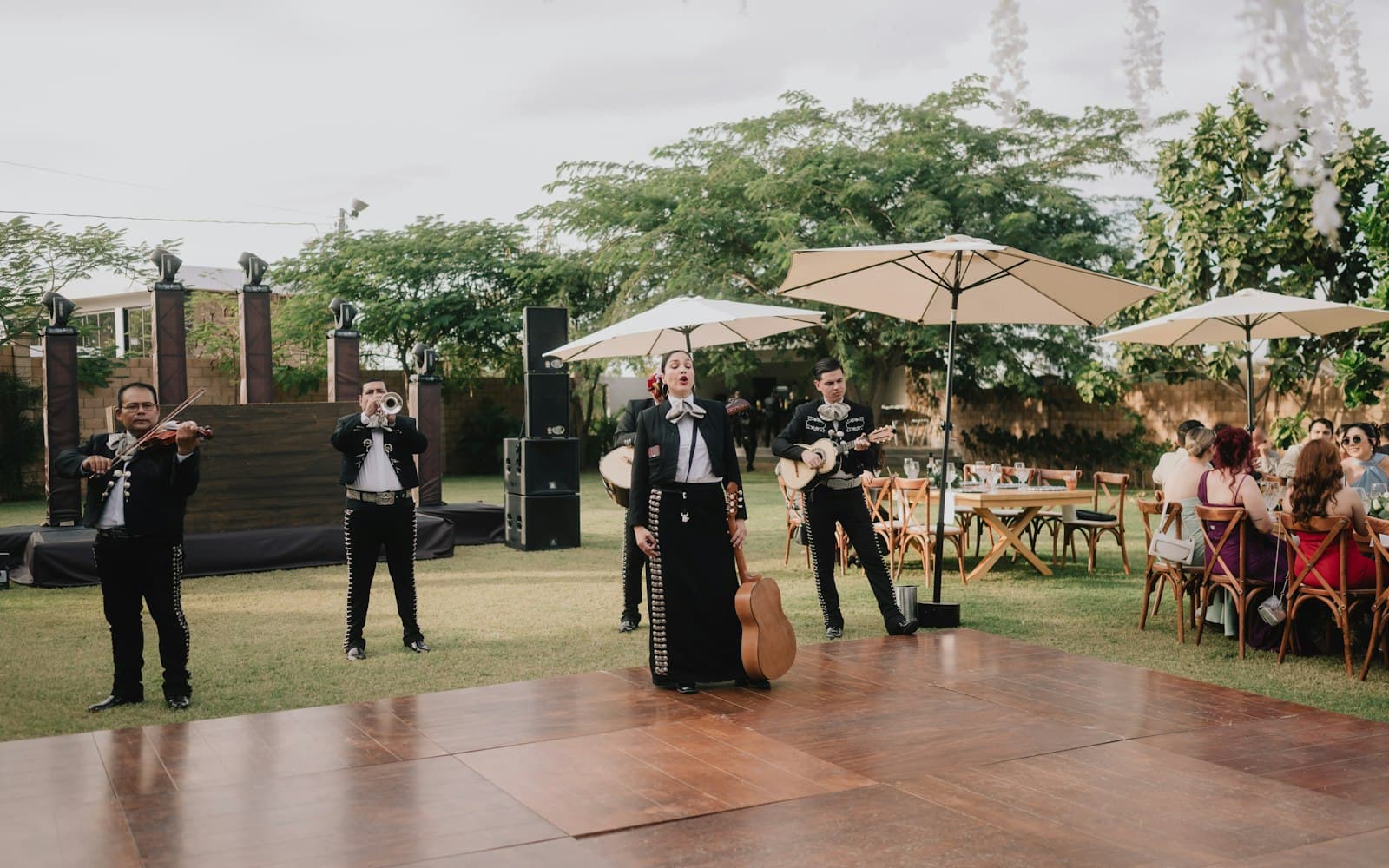
Whichever you choose, plan the handoff. We regularly coordinate layered lineups, such as a soloist for the ceremony and cocktail hour, a band through dinner, and a DJ to close the night. Set lengths, transitions, and the technical changeover are planned so the night feels like one continuous experience rather than a series of acts. Our guide to booking a live band for a Tampa Bay wedding covers the reception side.
When to book wedding ceremony musicians, and what happens next
For weddings, booking four to nine months out gives you the widest choice of musicians. Spring and fall Saturdays, the heart of Tampa Bay's wedding season, go first. Shorter notice can work, and same-week bookings are sometimes possible, but the options narrow as the date gets closer. Here is how booking with us works from first message to wedding day.
- Inquiry. Send your date, venue, guest count, ceremony and cocktail hour times, and the songs that matter most. We'll respond promptly with a curated shortlist.
- Preview. Every roster page has audio, video, photos, and setlists, and we can send more live footage on request.
- Proposal call. A 20-to-30-minute call by phone, Zoom, or Teams to walk through musicians, sound, and budget. Planning from out of state? We start on video. For Tampa Bay weddings, we're happy to meet in person or walk the venue with you.
- Contract and retainer. A signed contract and a retainer (typically 50% of the total) lock in your date and your musicians. The contract spells out performance times, setup windows, equipment, payment terms, and your point of contact.
- Music selection. Choose your processional, entrance, and recessional, and request any custom arrangements early.
- Pre-event questionnaire, four to six weeks out. Your final timeline, song list, must-play and do-not-play notes, venue contact, and load-in details in one place.
- Wedding day. Musicians arrive, set up, and soundcheck before guests arrive, and a named point of contact owns the day. If a musician becomes unavailable for any reason, a qualified replacement from our standby roster is sent at no additional cost.
What wedding ceremony musicians cost in Tampa Bay
We don't publish flat rates, because an honest number depends on the shape of your day. As a starting point, solo acoustic musicians booked through The Music Bureau typically start in the low four figures, and every proposal is itemized so you can see exactly what drives the total. The biggest cost drivers are:
- Number of musicians. A soloist, a duo, and a quartet are very different line items.
- Coverage. Ceremony only, or ceremony plus cocktail hour.
- Custom arrangements of songs that don't already exist for your ensemble.
- Sound. Whether the musicians' own system is enough or your site needs a dedicated ceremony system, power, or a generator.
- Date and season. Peak-season Saturdays are in the highest demand.
- Location. Travel within the Tampa Bay core is rolled into the quote. For weddings outside the region, travel, lodging, and per diem are itemized.
- Overtime. If the ceremony starts late and the musicians play longer, overtime is billed in 15- or 30-minute increments, as set out in the contract.
The lowest quote isn't always the cheapest. A musician who shows up to a beach ceremony without amplification, or without a plan for the officiant's microphone, saves money on paper and costs you the vows.
Questions to ask before you book
- Can we see or hear you play a ceremony, not just a concert or a bar set?
- Which of our songs do you already play, and which would need an arrangement?
- How do you time the processional to the walk?
- What sound do you bring, and is it enough for our guest count and site?
- Will you also mic the officiant, or does someone else handle that?
- What do you need at an outdoor site: shade, power, a flat surface, armless chairs?
- What happens if it rains, or if you get sick?
- Can you also play cocktail hour, and how will you hand off to our DJ or band?
- Are you insured, and can you provide a certificate of insurance to our venue?
For the last one, our answer is yes. The Music Bureau is licensed, bonded, and insured in Florida (FL #TA1500), and we issue certificates of insurance to your venue on request. Our FAQ covers contracts, payments, and day-of logistics in more detail.
Book wedding ceremony musicians for your Tampa Bay wedding
The Music Bureau books pre-vetted ceremony and cocktail hour musicians, bands, and DJs across Tampa, St. Petersburg, St. Pete Beach, Clearwater, Bradenton, and Sarasota, and builds the ceremony sound and production around them. Every act on our roster is auditioned before we book them, and we work alongside your planner on the full timeline, from the prelude to the last dance.
Tell us your date, your venue, your guest count, and the one song you can't get married without. We'll respond promptly with a shortlist of musicians, a sound plan for your site, and an itemized quote. Start on our contact page, email Booking@bookmusicbureau.com, or call (813) 616-1707. If you're planning the whole day, see how the ceremony, cocktail hour, and reception fit together on our Tampa Bay wedding entertainment page.
Frequently asked questions
How far in advance should we book wedding ceremony musicians in Tampa Bay?
For weddings, four to nine months out gives you the widest choice of musicians and keeps pricing cleanest. Spring and fall Saturdays fill first. Shorter notice can work, and same-week bookings are sometimes possible, but the options narrow as the date gets closer.
How many musicians do we need for a wedding ceremony?
It depends on your guest count, your site, and the sound you want. A solo violinist, guitarist, or pianist suits an intimate ceremony. A duo adds depth without needing much more space. A string trio or quartet gives a fuller, more formal sound for larger guest counts and ballrooms. Outdoors, light amplification matters as much as the number of players.
Can ceremony musicians play outdoors or on the beach in Florida?
Yes, with planning. Musicians need shade, because heat, sun, and humidity knock acoustic instruments out of tune. Beach and waterfront sites also need light amplification against the wind, a flat surface for chairs and stands, a power source, and a rain plan agreed at booking. Many public beaches have rules on events and amplified sound, so confirm with your venue or the city.
Can our ceremony musicians learn a song that isn't in their repertoire?
Often, yes. Our ceremony ensembles offer custom arrangements of your processional, recessional, and other key songs. Ask early, because a new arrangement takes time to write and rehearse, and approve a backup song in case your first choice does not translate well to the instrument.
How much do wedding ceremony musicians cost in Tampa Bay?
Solo acoustic musicians booked through The Music Bureau typically start in the low four figures. The total depends on the number of musicians, how long they play, custom arrangements, the sound system your site needs, the date, and travel. Every proposal is itemized, so you can see exactly what drives the price.
Can the same musicians play our ceremony and cocktail hour?
Yes, and it is the simplest setup when the two spaces are close together. You can also bring in a different act for cocktail hour, such as a jazz duo, or hand off to your DJ or band. We plan set lengths and transitions so the music doesn't stop between the ceremony and the reception.