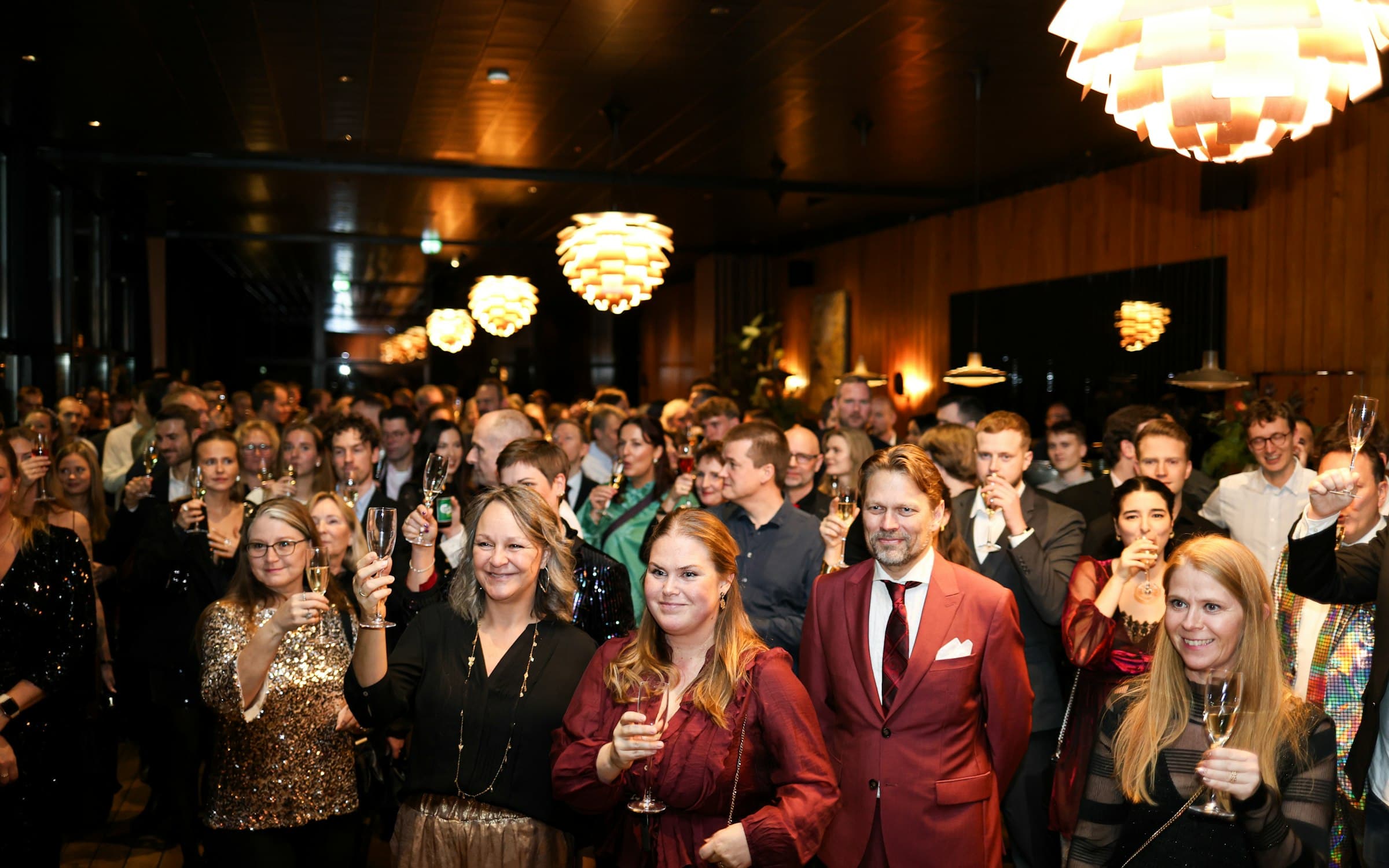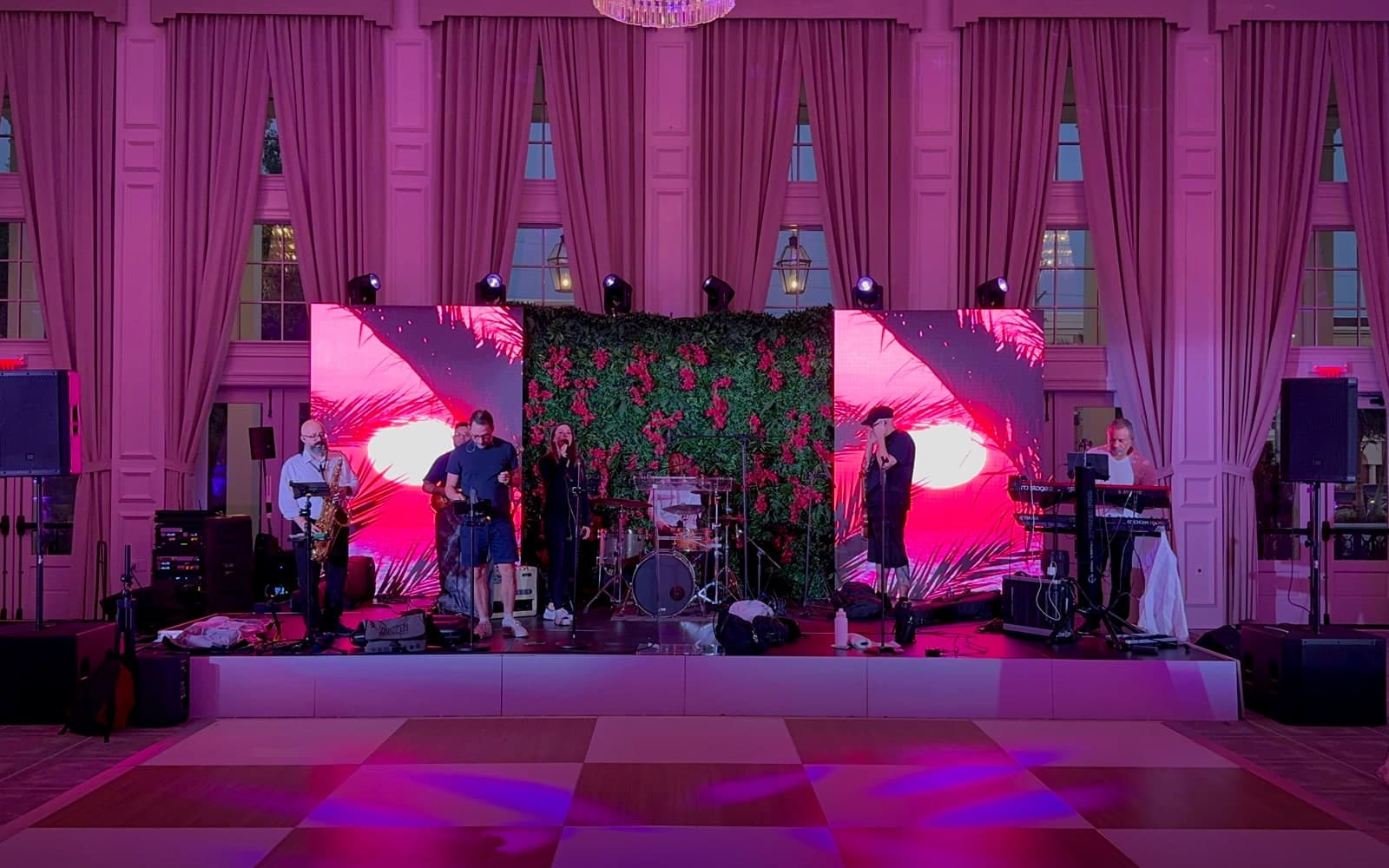
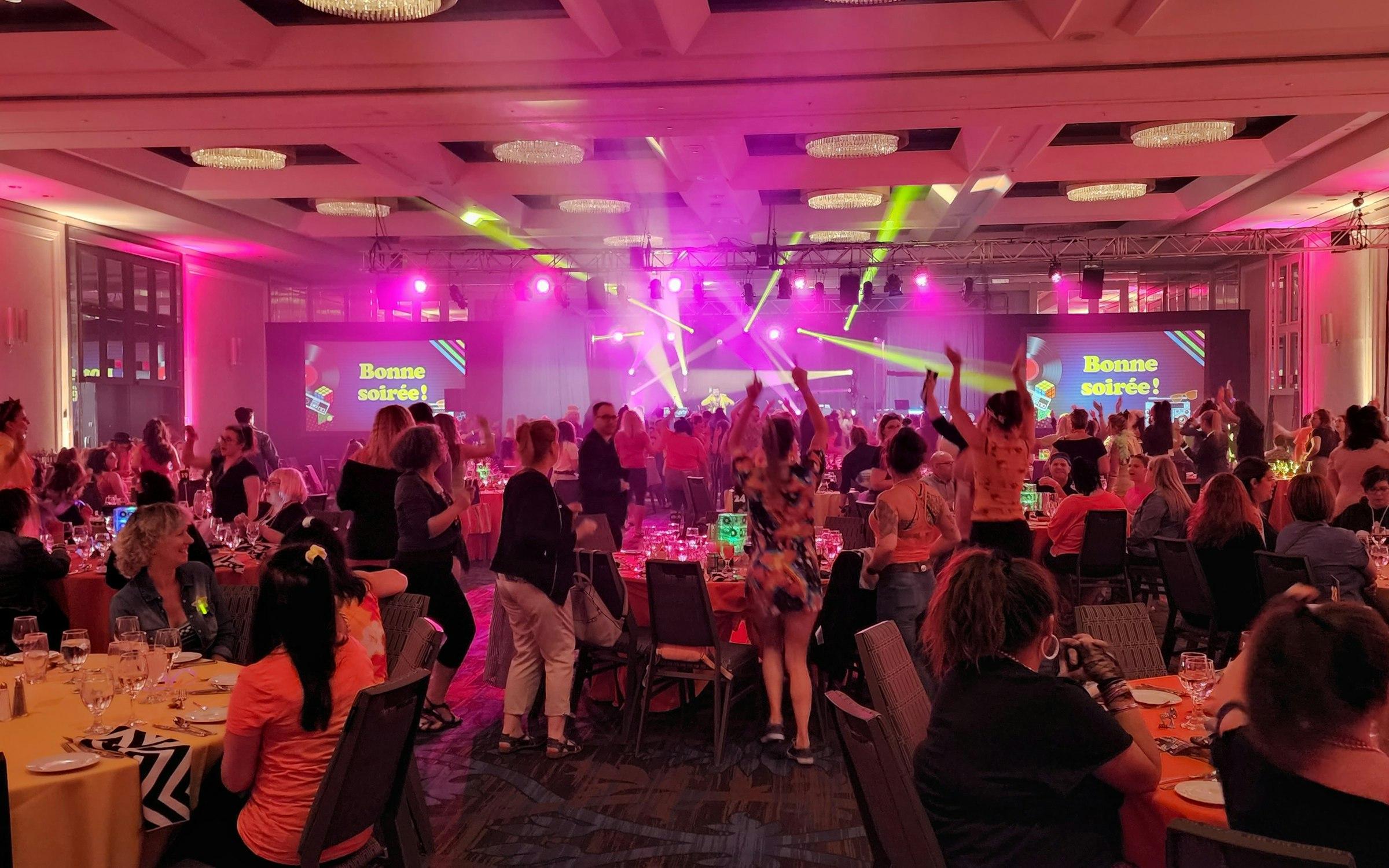
A gala is the one night of the year when a room full of supporters is asked, out loud, to give. Everything else on the evening, from the cocktails to the dinner to the band, either builds toward that moment or gets in its way. That's what makes charity gala entertainment in Tampa different from booking music for a party: the music has a job to do for the mission, and it has to know exactly when to stop.
This guide is written for the people who carry the gala: development directors, special events managers, and volunteer committee chairs at Tampa Bay nonprofits, from hospital foundations and arts organizations to schools and community causes in Tampa, St. Pete, Clearwater, and Sarasota. If you're planning a spring gala, you're in the middle of the big decisions right now: venue, theme, auction, sponsors, and the entertainment that ties the night together.
We're The Music Bureau, a Tampa-based booking agency and event production company. We book pre-vetted bands, DJs, and musicians, produce the sound, lighting, staging, and LED screens around them, and coordinate the auction side through our event production team. Here is how we approach a fundraising night.
What charity gala entertainment has to do for a fundraising night
A holiday party succeeds if people have a good time. A wedding succeeds if the couple feels celebrated. A gala has a harder scorecard: the money raised, and whether donors leave feeling closer to the mission. Entertainment can't write a check, but it shapes the room that does. At a fundraising gala, the music and production have four jobs.
- Set the tone at the door. The first ten minutes tell donors and sponsors what kind of evening this is. Live music during arrivals signals care and occasion, and it gives guests a reason to linger near the silent auction instead of heading straight to their seats.
- Protect the program. The mission video, the speakers, the live auction, and the paddle raise carry most of the night's revenue and meaning. Every entertainment decision should make that stretch easier to hear, see, and feel.
- Hold the room after the ask. When the paddle raise ends with a strong first song, donors, sponsors, and board members stay to celebrate together. When it ends with a band on break and the house lights up, the coat check fills.
- Carry the theme and the mission. A gala theme gives the music a brief. A Havana Nights evening, a Roaring '20s party, and a classic black-tie dinner each call for different artists, and the right fit makes the whole night feel considered.
Share your fundraising goal, your theme, and a rough run-of-show with every entertainment and production vendor at the start. It turns a list of bookings into a plan, and it surfaces timing problems months before the night.
Build the gala run-of-show around the ask
Most fundraising galas follow the same shape, whatever the theme. The table below shows an illustrative evening with a seated dinner, a live auction, and a paddle raise. Your times will move with the venue, the guest count, and your program, but the order is what matters.
| Sample time | Phase | What the music does | Formats that fit |
|---|---|---|---|
| 6:00 p.m. | Arrivals, cocktails, and silent auction | Conversation-level background that keeps guests browsing and talking | Jazz trio, string ensemble, pianist, vocalist with keys, or an all-vinyl DJ |
| 7:15 p.m. | Seating and welcome | A clear cue that moves the room to the tables, then walk-up music for the emcee | DJ or bandleader with clean microphones |
| 7:30 p.m. | Dinner service | Present but low enough for table conversation | Small ensemble or a curated playlist |
| 8:15 p.m. | Mission moment | Silence, or the video's own soundtrack played cleanly through the house system | Production team: playback, screens, and microphones |
| 8:30 p.m. | Live auction and paddle raise | No sets. Short cues between lots and a celebration cue at the goal | Auctioneer with production support; band or DJ on standby |
| 9:15 p.m. | Celebration | The high point of the night, starting the moment the last paddle goes down | Live band, DJ, or a band-and-DJ hybrid |
| 10:30 p.m. | Send-off and auction pickup | Music that winds down instead of cutting off | DJ or playlist |
A few rules hold for almost every gala we produce:
- Ask while the room is seated and fed. Run the live auction and paddle raise after dinner service winds down and before the dance floor opens, while guests are still at their tables and paying attention.
- Keep the auction tight. A handful of strong live lots holds a room better than a long list. Your auctioneer will have a view on the order and on where the paddle raise lands. Ask for it early and build the music cues around it.
- Plan the band's breaks around the program. Bands typically play 30 to 45 minute sets with 15 to 20 minute breaks. Schedule the first full set to start right after the paddle raise, not halfway through it, and make sure no break lands on the transition into the celebration.
- Put one person on the cues. The emcee, the auctioneer, the band, the DJ, and the production lead should all be working from the same timed run-of-show, with one person calling the transitions.
For a broader look at pacing a room, our guide to professional music programming explains how energy, tempo, and transitions shape an evening.
Silent auction and cocktail hour music that keeps guests browsing
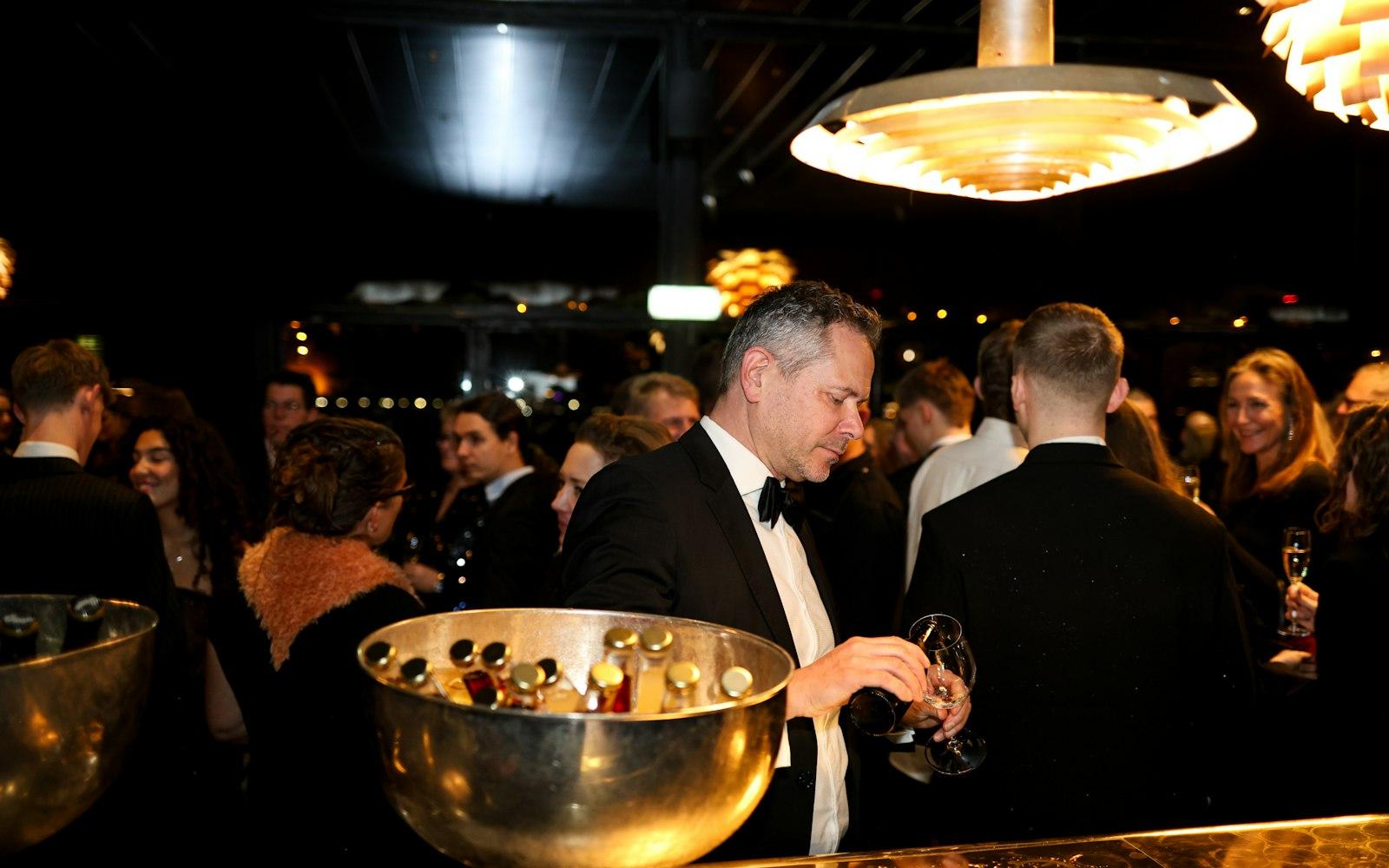
The first hour of a gala does double duty. It's the welcome, and for many organizations it's also the silent auction. Guests are greeting friends, talking to volunteers about auction packages, and placing bids, so the music needs to fill the room without taking it over.
- Keep it at conversation volume. If guests have to lean in to talk, the music is too loud. Acoustic and small-ensemble formats are built for this.
- Place the musicians with intent. Position them so they draw guests through the auction displays rather than blocking them, and keep amplified sound away from the check-in table, where volunteers need to hear names.
- Match the format to the room. A jazz trio, a string duo or trio, a pianist, or a vocalist with keys reads as elegant in a ballroom foyer or museum atrium. For a lounge-style reception, an all-vinyl DJ brings a curated, tactile feel. Browse our solo musicians and small ensembles.
- Use the microphone for the closing push. Timed announcements as the silent auction winds down give bidders one more reason to check their bid sheets or phones. Your emcee or DJ can handle them without stopping the music.
If you prefer recorded music for dinner, a custom-curated playlist built for the theme keeps the room consistent between the reception and the program, and hands off cleanly to the live act.
Live auction and paddle raise: what the band, DJ, and production team should do

This is the stretch of the night where production quality turns into revenue. A mission video that plays without sound, an auctioneer whose microphone cuts out, or a back half of the room that can't see the bidding all cost the cause. Here is what we ask every entertainment and production team to do.
- Stop the music for the program. No live sets during the mission moment, the live auction, or the paddle raise. Guests can't respond to what they can't hear.
- Give the auctioneer the best microphone in the room. A dedicated wireless handheld, a spare on stage, fresh batteries, and a soundcheck with the auctioneer before doors. Many auctioneers work the floor, so walk the room during soundcheck and confirm the back tables and the bar can hear clearly.
- Light the bidders, not just the stage. The auctioneer and bid spotters need to see paddles across the room. Bring up a wash over the tables for the auction instead of leaving the room at dinner darkness, then drop it again for the dance floor.
- Put the auction on screen. LED walls or projection can show each live lot, a running total or goal graphic for the paddle raise, sponsor recognition, and mobile bidding instructions. Guests at the back tables give to what they can see.
- Cue, don't perform. Agree on short walk-up stings for each lot and a celebration cue when a lot sells or the paddle raise hits its goal. Some auctioneers like a quiet underscore during the paddle raise; others want silence. Follow their lead.
- Rehearse the mission video. Test it on the actual screens and through the actual sound system during soundcheck, with the file loaded on a second device as a backup. A video that stalls in front of a full ballroom is hard to recover from.
- Have the band ready before the last paddle. The transition from the paddle raise into the first song is the most important cue of the night. The band should be on stage and checked while the auctioneer is closing, so the celebration starts the moment the goal is announced.
“Guests can't give to what they can't hear. The best gala music knows exactly when to stop, and exactly when to come back in.”
Choosing a gala band, DJ, or layered bill in Tampa Bay
A gala crowd is one of the most mixed audiences you'll book for: longtime donors and board members, a young professionals committee, sponsors and their guests, and the people your organization serves. The entertainment has to work for all of them, and the format should follow the room, the program, and the theme.
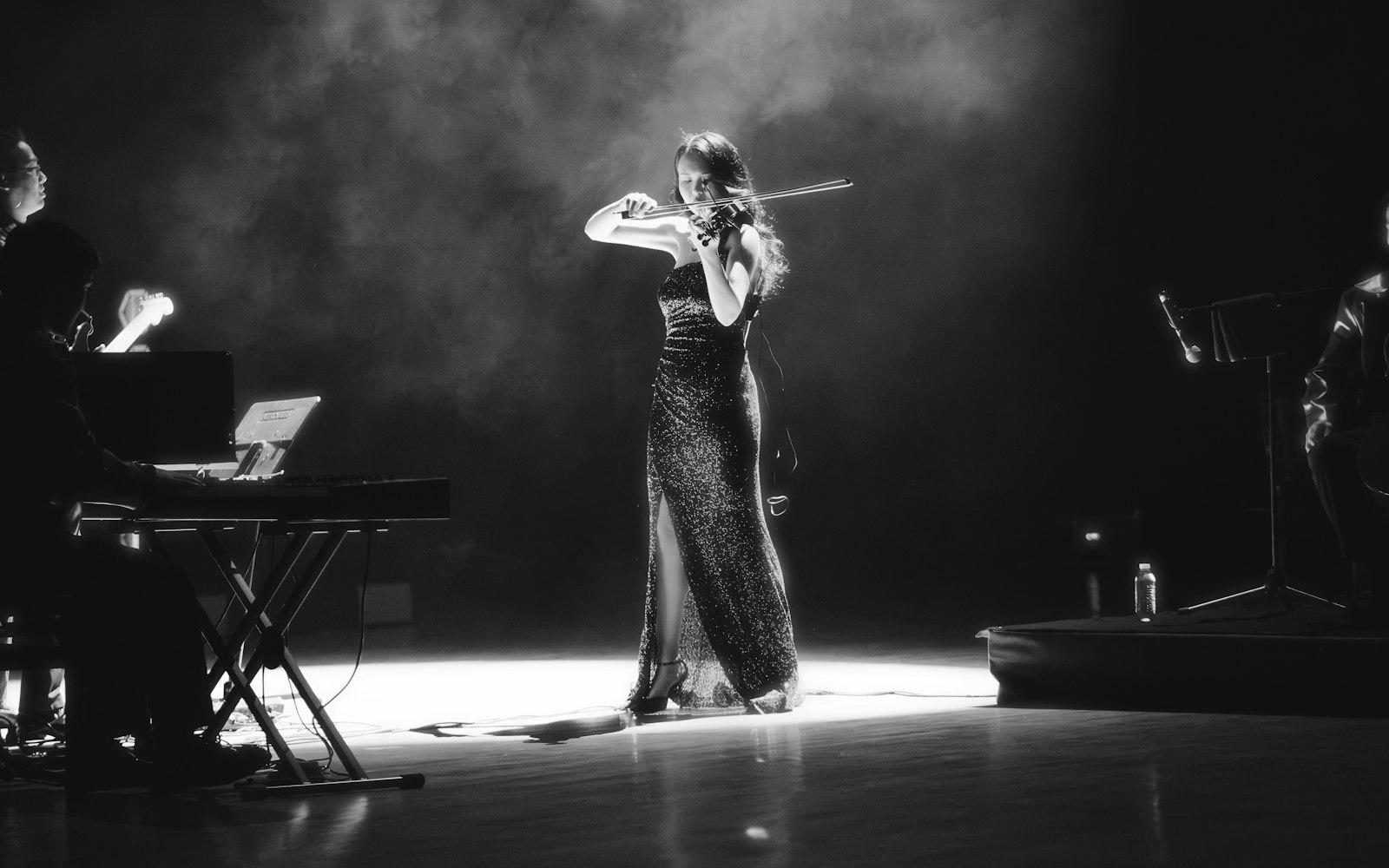
- Small ensembles for the reception and dinner. A jazz trio, a string ensemble, a pianist, or a vocalist with keys sets an elegant tone and stays out of the way of conversation.
- A DJ who can also emcee. A gala DJ handles the silent auction announcements, walk-up cues for speakers, the auction stings, and a dance floor with no breaks. Bilingual MCs are available on request. Browse our Tampa Bay DJs.
- A live band for the celebration. Nothing marks the end of the ask like a band counting in. Our live bands range from a duo to a ten-piece showband with horns across Top 40, funk, R&B, neo-soul, Latin, and jazz.
- A layered bill. A trio for cocktails, a DJ and emcee through the program, and a band for the celebration is a common shape for a gala. We coordinate the set lengths, transitions, and technical handoffs so it runs as one continuous evening.
- A feature moment or roaming performers. A solo violinist or vocalist can open the program or introduce the mission video. Magicians, live painters, and performance artists suit a reception where guests are moving around. A live painter who finishes a piece during the evening also gives the live auction a lot guests watched being made.
| Gala theme | Reception and dinner | After the ask |
|---|---|---|
| Classic black tie | String ensemble or jazz trio | Showband with horns, with a DJ between sets |
| Havana Nights or a Latin theme | Latin jazz or acoustic Latin guitar | Latin band with a salsa set, then a Latin-leaning DJ |
| Roaring '20s or Gatsby | Jazz ensemble playing standards | Band that moves from swing into decades favorites |
| Motown or soul revue | Neo-soul vocalist with keys | R&B and funk band with horns |
| Decades or '80s night | Curated playlist built for the theme | Open-format DJ or a cover band with a decades set |
Tampa's Cuban and Latin roots, from Ybor City outward, make a Latin set one of the fastest ways to get a mixed gala crowd onto the dance floor, whatever the theme. If you're still weighing formats, our guide to choosing a live band, DJ, or hybrid walks through the trade-offs in more depth.
Gala production in Tampa Bay venues: sound, screens, and lighting
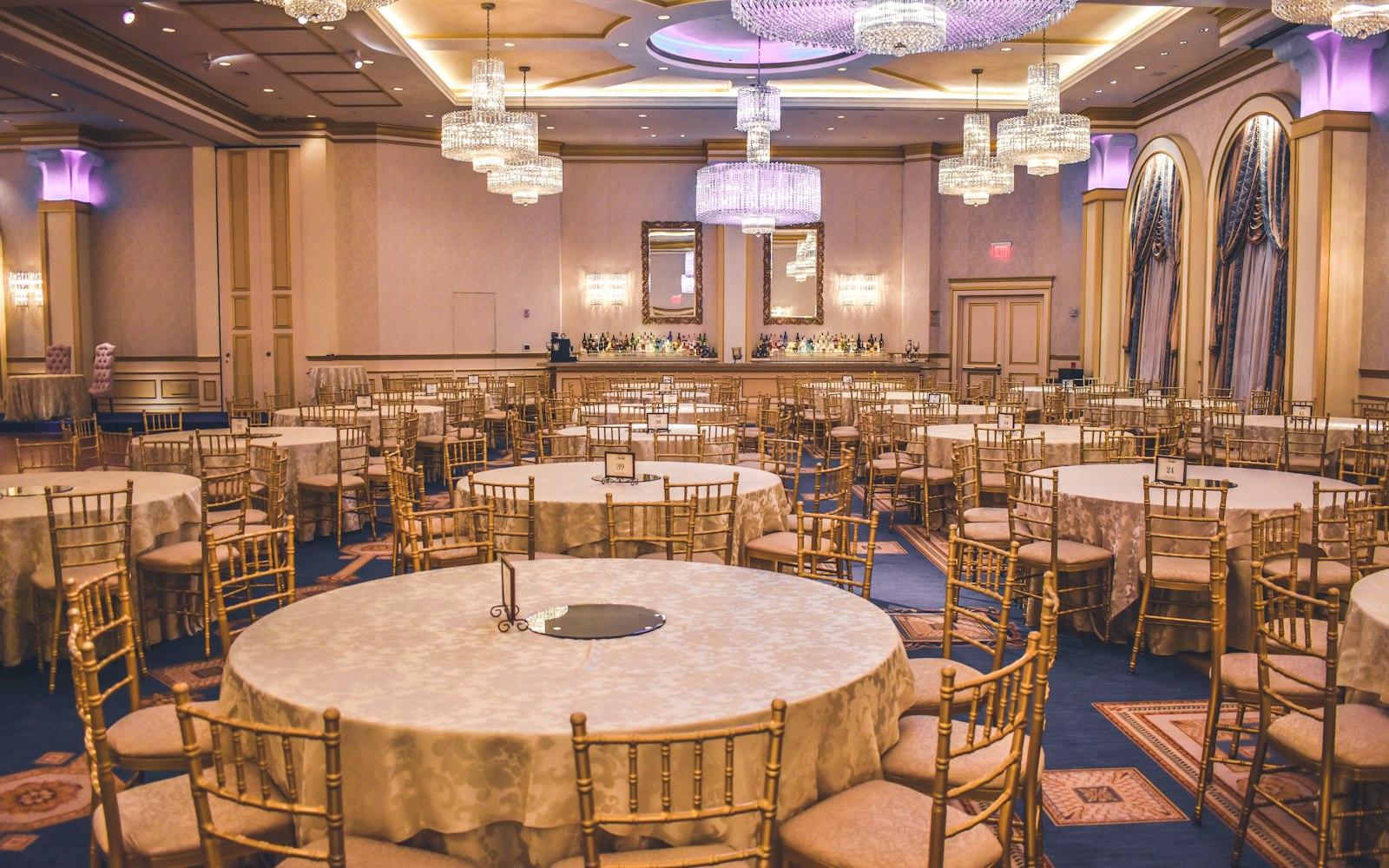
The venue decides more about your gala entertainment than most committees expect: how loud the music can be, how much power is available, when the crew can load in, and how late the night can run. Most Tampa Bay galas land in one of four kinds of space.
- Hotel ballrooms. The workhorse of gala season, from downtown Tampa and Water Street to Westshore and the St. Pete waterfront. Ask early about the in-house AV policy, any fees for outside production vendors or power, the load-in route, and the hard end time.
- Museums and cultural venues. Memorable settings that tie neatly to an arts or education mission, but they often come with rules: load-in after public hours, volume limits, restrictions on haze and effects near collections, and limited power.
- Country clubs and yacht clubs. A natural home for long-running galas with loyal members. Rooms can be smaller than a hotel ballroom, so plan the stage footprint, the dance floor, and the auction display space together.
- Tents and waterfront lawns. Beautiful at sunset and demanding after it. Plan for generator power, weather calls, wind off the water, and lighting once the sun goes down. Our guide to outdoor event lighting and AV in Florida weather covers the details.
Whatever the room, a gala production package should cover the program first and the party second:
- Speech-first sound. Clear coverage at every table, which in long ballrooms can mean additional speakers toward the back, plus dedicated microphones for the emcee, speakers, and auctioneer.
- Screens every guest can see. LED walls or projection for the mission video, the auction lots, the paddle raise goal, and the sponsor loop. Sponsor recognition is usually a benefit your sponsors paid for, so build and approve that loop well before the night.
- Lighting with a cue for each phase. Uplighting in your organization's colors, a clean wash on the podium, a brighter room for the auction, and intelligent lighting once the dance floor opens.
- Staging that keeps sightlines clear. Stage decking or risers for the band, a podium position every table can see, and room for the auctioneer to move.
- One big moment, cleared in advance. Cold sparks or a CO2 burst when the paddle raise hits its goal or the dance floor opens can make the moment land, provided the venue approves it. Our cold sparks and special effects guide explains what venues typically require.
As a rule of thumb, events under about a hundred guests are often self-sufficient, with the act bringing its own sound. Galas rarely fit that rule, because the program needs more than a band's PA. Our production services cover sound, lighting, staging, LED walls, backline, and an on-site production lead, and our guide to what full-service event production really includes explains the moving parts. For room-by-room advice, see our Tampa Bay venue guide.
What drives the cost of gala entertainment, and how to make it go further
Every gala is quoted to its own scope, so we don't publish flat rates. As a starting point, our FAQ notes that solo acoustic musicians typically start in the low four figures, while DJs and bands scale up from there depending on the format. Production is quoted separately. Here is what moves the number:
- The date. Saturdays at the height of gala season are in the highest demand. Fridays and weeknights can stretch a budget further.
- The size of the act. A DJ, a jazz trio, a five-piece band, and a ten-piece showband are very different line items.
- Hours of music. A reception-to-last-song evening with a layered bill covers more performance time than a single post-auction set. Overtime terms are spelled out in the contract before you sign.
- Production scope. Sound, screens, lighting, and staging scale with the room, the guest count, and how much of the program lives on screen.
- Venue logistics. After-hours load-ins, long carries, early setup windows, and multiple performance areas add time and crew.
- Travel. Within the Tampa Bay core, travel is rolled into the quote. For galas outside the market, travel, lodging, and per diem are itemized.
Nonprofit budgets get more scrutiny than most, and every dollar spent on the evening is a dollar the committee has to justify. A few ways to get more from the entertainment line:
- Offer an entertainment sponsorship. A sponsor who underwrites the band or the production gets recognition on screen and in the program, and the cost comes off your event budget.
- Spend where guests feel it. Clear sound during the program and a strong celebration set do more for the night than extra decor guests pass on the way in.
- Layer instead of upsizing. A trio for cocktails and a DJ with a live sax or percussion player for the celebration can deliver a full evening without a large band playing all night.
- Consolidate vendors. One itemized proposal and one contract for entertainment, production, and auction coordination make reconciliation easier for your finance team and simpler to report to the board.
Every proposal from The Music Bureau is fully itemized, so your committee can see exactly what's driving the total and where to adjust if the number needs to come down.
When to book gala entertainment in Tampa Bay
Tampa Bay's gala calendar is busiest from fall through spring, when the weather cooperates and many seasonal residents are in town. Many organizations want the same Saturdays, which means they want the same bands, production crews, and ballrooms too. Work backward from your date:
- Secure the venue first. Its contract sets your AV rules, load-in window, power, and end time, all of which shape the entertainment.
- Book entertainment and production four to nine months out. That window gives you the widest pick of the roster. A signed contract and a retainer, typically 50% of the total, lock the date. If your committee or board approves vendor contracts, start early enough to fit that approval cycle.
- Lock the run-of-show two to three months out. Bring the auctioneer, the emcee, the entertainment, and the production lead into one conversation, and collect sponsor logos and the mission video.
- Return the pre-event questionnaire four to six weeks out. We send it to capture the final timeline, names and pronunciations for the emcee, do-not-play preferences, and venue contacts in one place.
- Confirm the week of. Load-in time, soundcheck with the auctioneer and speakers, and final video and screen files.
Short-notice inquiries are welcome, and the right fit is sometimes available on a few weeks' notice, but the options narrow quickly during peak season. If you're planning a full year of donor and corporate events, our Tampa corporate event entertainment playbook covers activations, summits, and holiday parties alongside the gala.
Your charity gala entertainment checklist
- Write down the fundraising goal, the theme, and the guest count, and share them with every vendor.
- Get the venue's vendor requirements: AV policy, insurance, power, load-in, and end time.
- Draft a run-of-show with the mission moment, live auction, and paddle raise placed before the dance floor opens.
- Choose formats for each phase: reception, dinner, program cues, and the celebration.
- Introduce your auctioneer to the entertainment and production team, and agree on cues, microphones, and lighting for the auction.
- Scope production: speech-first sound, screens, lighting, staging, and any special effect for the goal reveal.
- Build and approve the sponsor loop, auction slides, and mission video for the screens.
- Send the emcee every name, title, and pronunciation in writing.
- Return the pre-event questionnaire with final details four to six weeks out.
- Confirm the day-of contact, load-in, and a soundcheck that includes the auctioneer and the video.
Book charity gala entertainment in Tampa with The Music Bureau
The Music Bureau was founded in Tampa in 2020 by experienced musicians and talent buyers, and we're licensed, bonded, and insured in Florida (License FL #TA1500), with certificates of insurance issued to your venue on request. We book pre-vetted bands, DJs, and musicians, produce the sound, lighting, staging, and screens around them, coordinate the auction side, and keep one named point of contact on your gala from the first call to load-out. If an artist becomes unavailable, a standby roster means a qualified replacement is sent at no additional cost.
Already have an auctioneer, a planner, or an AV company? We regularly work alongside the vendors you have in place, and event consultation is available as a standalone service. See how our corporate and gala event team handles entertainment and production end to end.
Tell us your date, venue, guest count, theme, and fundraising goal. We'll respond promptly with a format recommendation, a curated shortlist of artists, a production plan, and an itemized quote, and we're happy to walk the venue with your committee for Tampa Bay galas. Start on our contact page, email Booking@bookmusicbureau.com, or call (813) 616-1707.
Frequently asked questions
How far in advance should we book charity gala entertainment in Tampa?
Four to nine months out gives you the widest choice of bands, DJs, and production crews, and Saturdays during Tampa Bay's fall-through-spring gala season are usually the first dates to go. Book entertainment soon after you sign the venue, because the venue contract sets your load-in window, end time, and AV rules. Shorter notice can still work, but the roster narrows as the date gets closer.
Should the band play during the live auction and paddle raise?
No. Live sets should stop for the mission moment, the live auction, and the paddle raise so every guest can hear the speakers and the auctioneer. The DJ or band can play short walk-up cues between lots, a quiet underscore only if your auctioneer asks for one, and a celebration cue when you hit the goal. The dance set should start the moment the paddle raise ends.
Can The Music Bureau coordinate our auctioneer and mobile bidding?
Yes. Qtego coordination and auctioneer services are part of our event production offering, so the auction, the screens, the microphones, and the entertainment can run from one run-of-show with one point of contact. If your auctioneer or bidding platform is already booked, we coordinate the production and entertainment around them.
How much does gala entertainment cost in Tampa?
Every gala is quoted to its own scope. The main cost drivers are the date, the size of the act, how many hours of music you need, and how much sound, lighting, staging, and screen work the venue and program require. As a starting point, solo acoustic musicians typically start in the low four figures, while DJs and bands scale up from there. Production is quoted separately, and every proposal is fully itemized.
Does our gala need a full production package?
Usually, yes. Events under about a hundred guests can often run on the sound the act brings, but a gala program depends on clear speech at every table, a mission video that plays cleanly, and screens every guest can see. Larger galas, outdoor events, and anything with video, a live auction, or sponsor recognition on screen get a scoped production package.
Can you work with a band, auctioneer, or AV company we've already booked?
Yes. We regularly handle the entertainment, production, or consultation side of events where some vendors are already in place. Send us what's confirmed and we'll build the rest of the night around it. Event consultation is also available as a standalone service.