There is a specific sound a room makes when a curtain of sparks goes up behind a couple on the last chorus of their first dance: a half-second of silence, then every phone in the room comes up at once. That reaction is exactly what people are after when they ask about cold sparks in Tampa. It is also an easy effect to get wrong: booked late, placed badly, blocked by the venue, or fired during the wrong eight bars.
This guide is written for Tampa Bay couples, the wedding planners who work with them, and the corporate event managers who want one big moment in the program. We cover what cold sparks, lasers, haze, low fog, CO2, and confetti actually involve, what venues and fire authorities tend to ask for, how Florida weather changes the plan, and how to decide which effect earns its place. We're writing it as the team that designs and runs these effects inside our event production packages, not as a rental catalog.
What cold sparks actually are, and what “cold” doesn't mean
A cold spark machine is a floor unit that heats small metal granules and blows them upward in a fountain of sparks. It is a different kind of effect from traditional pyrotechnics, which is why some venues that won't allow fireworks will consider it.
But “cold” is a marketing word, not a safety rating. The effect still needs clearance from guests, drapery, and anything that can scorch or catch, and it can affect smoke detectors. Treat a cold spark machine as a piece of production equipment with an operator, a placement plan, and a safety zone, not as a party favor.
Choose one moment for cold sparks, and design around it
The strongest special effects are cued to a single moment, not sprinkled across a night. Every additional firing costs you surprise. For most Tampa Bay weddings, the options that land best are:
- The grand entrance. A pair of spark fountains framing the doorway as the couple is introduced. High energy, short cue, easy to photograph.
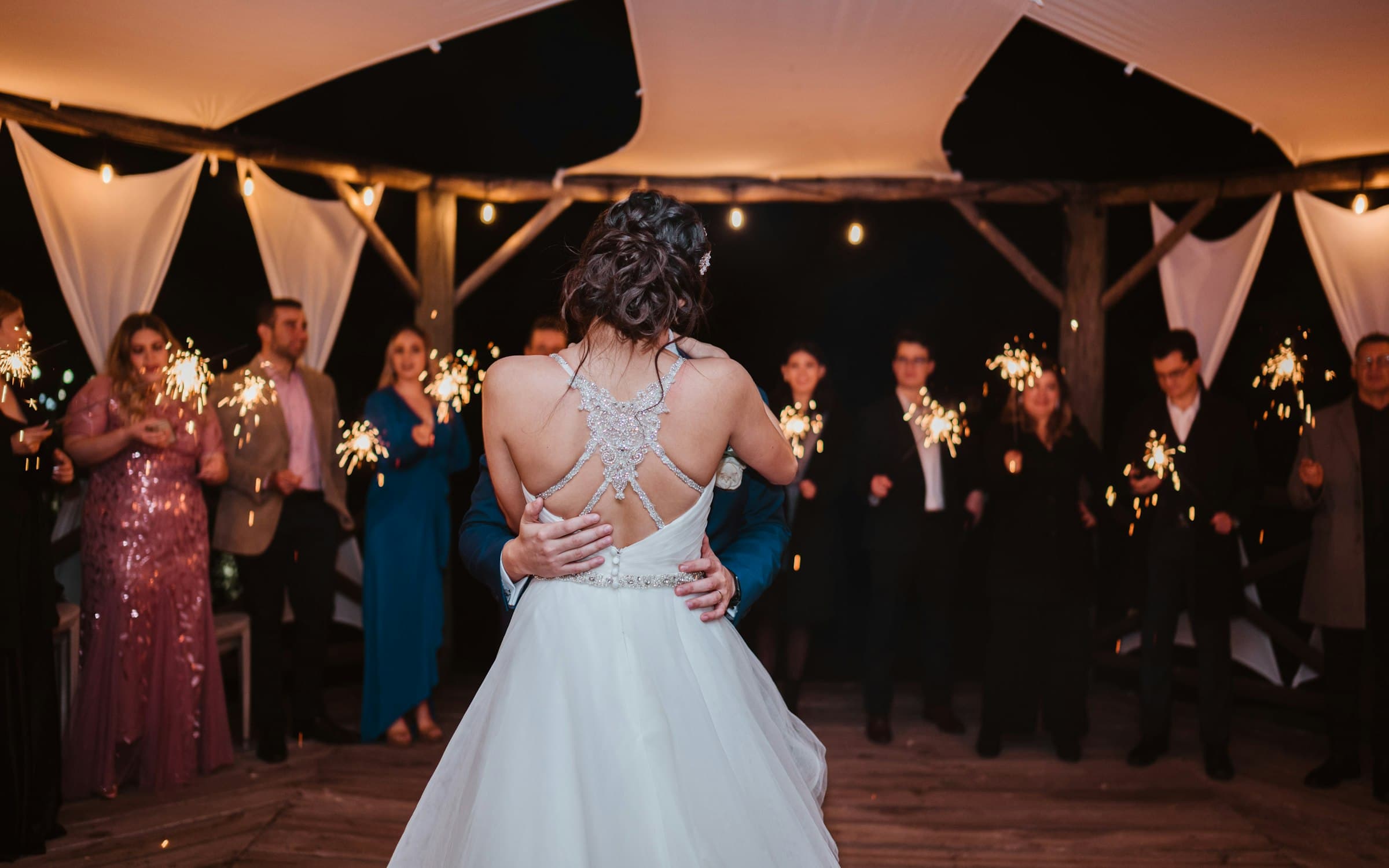
- The first dance. The classic use. Sparks fire on the final chorus or the key change, not the opening bars, so the room has already settled into the moment before it peaks.
- The last dance or the late-night set. A finale that sends guests out on a high, and a good choice when the first dance is deliberately quiet.
- For corporate events: a keynote walk-on, an award reveal, a product unveil, or the downbeat of the headline set. Our corporate entertainment playbook covers how to build a program around one moment like this.
Pick the moment first, then the song, then the effect. Doing it in that order means the band or DJ, the lighting operator, and the effects operator are all working from the same cue rather than improvising.
Venue approval comes first: what Tampa Bay venues usually ask for
The most common way special effects fall apart is that the couple falls in love with the idea after the venue contract is signed, and the venue says no. Ask before you sign. When a venue does allow effects, expect some or all of the following:
- Written approval naming the effect, the room, and where the units will sit. A verbal “should be fine” from a sales manager is not approval.
- Product specifications and safety data sheets for the machines and the granules, fluid, or gas being used.
- A certificate of insurance from the production company.
- A named, trained operator on site for the full time the equipment is in the room, not a machine left for the DJ to run.
- A plan for smoke detectors, coordinated with the venue.
- Any local requirements. These vary by location, so confirm them for your specific venue rather than assuming what applied at a friend's wedding.
This is paperwork the production team should own, not the couple. The Music Bureau is licensed, bonded, and insured in Florida, and when we run effects as part of a production we coordinate the documentation with the venue directly. For a wider look at how different rooms behave, see our Tampa Bay venue guide.
Indoors vs. outdoors: Tampa Bay wind, humidity, and afternoon storms
Indoors, the challenges are ceiling height, detectors, and decor. Outdoors, the challenge is Florida. A few things we plan for on every outdoor effect across the Tampa Bay area:
- Wind on the water. Waterfront lawns, docks, and beach sites around Tampa Bay often have a steady breeze that pushes spark fall and haze sideways. Placement is set from the wind direction on the day, which is why an operator needs room to adjust.
- Rain and humidity. Spark machines, hazers, and lasers are electrical equipment. Florida weather changes fast, so outdoor effects need covered positions, dry power, and a clear call time for moving them indoors or cutting them.
- Surfaces. Sand, dry grass, wooden decks, and artificial turf each change where units can safely sit.
- Decor and attire. Pampas grass, dried florals, tulle, chiffon draping, veils, and long trains all need distance from spark effects. Share the decor plan and the ceremony-to-reception flip with your production team.
Our guide to outdoor event lighting and AV in Florida weather covers the rain call and power planning in more detail. The same thinking applies to effects.
Special effects at a glance
Cold sparks get the most requests, but they are one tool among several. Here is how the effects we most often design into Tampa Bay weddings and corporate events compare. “Sign-off” is what typically comes up, not a legal checklist; your venue and local fire authority set the actual requirements.
| Effect | Best moment | Indoors | Outdoors | What usually needs sign-off |
|---|---|---|---|---|
| Cold sparks | Grand entrance, first dance, finale, keynote walk-on | Often, with venue approval and ceiling clearance | Yes, weather and wind permitting | Venue approval, detector plan, any local requirements |
| Atmospheric haze | All night, to make lighting and lasers visible | Yes, where detectors are managed | Limited: wind carries it off | Detector plan with the venue |
| Low-lying fog | First dance “dancing on a cloud” | Yes, on a smooth floor | Rarely effective | Venue approval, detectors, slip-safe floor |
| Lasers | Corporate reveals, dance sets, headline performances | Yes, with a qualified operator | Yes, with extra lead time | Qualified operator; additional approvals for outdoor shows |
| CO2 jets | The drop in a dance set, a big reveal | Larger, well-ventilated rooms | Yes | Venue approval, ventilation, trained operator |
| Confetti and streamers | Finale, countdown, award moment | Where the venue allows it | Often restricted, especially near water | Venue approval and a cleanup plan |
| Pyrotechnics | Large outdoor finales and festival stages | Rarely | Yes, with licensed operators | Licensed operators and local approvals |
Lasers: plan them early
A laser show is easy to underestimate. Show lasers are regulated equipment, and compliance is the operator's responsibility, not yours. Still, ask your production team who is running the lasers and how they handle safety and approvals.
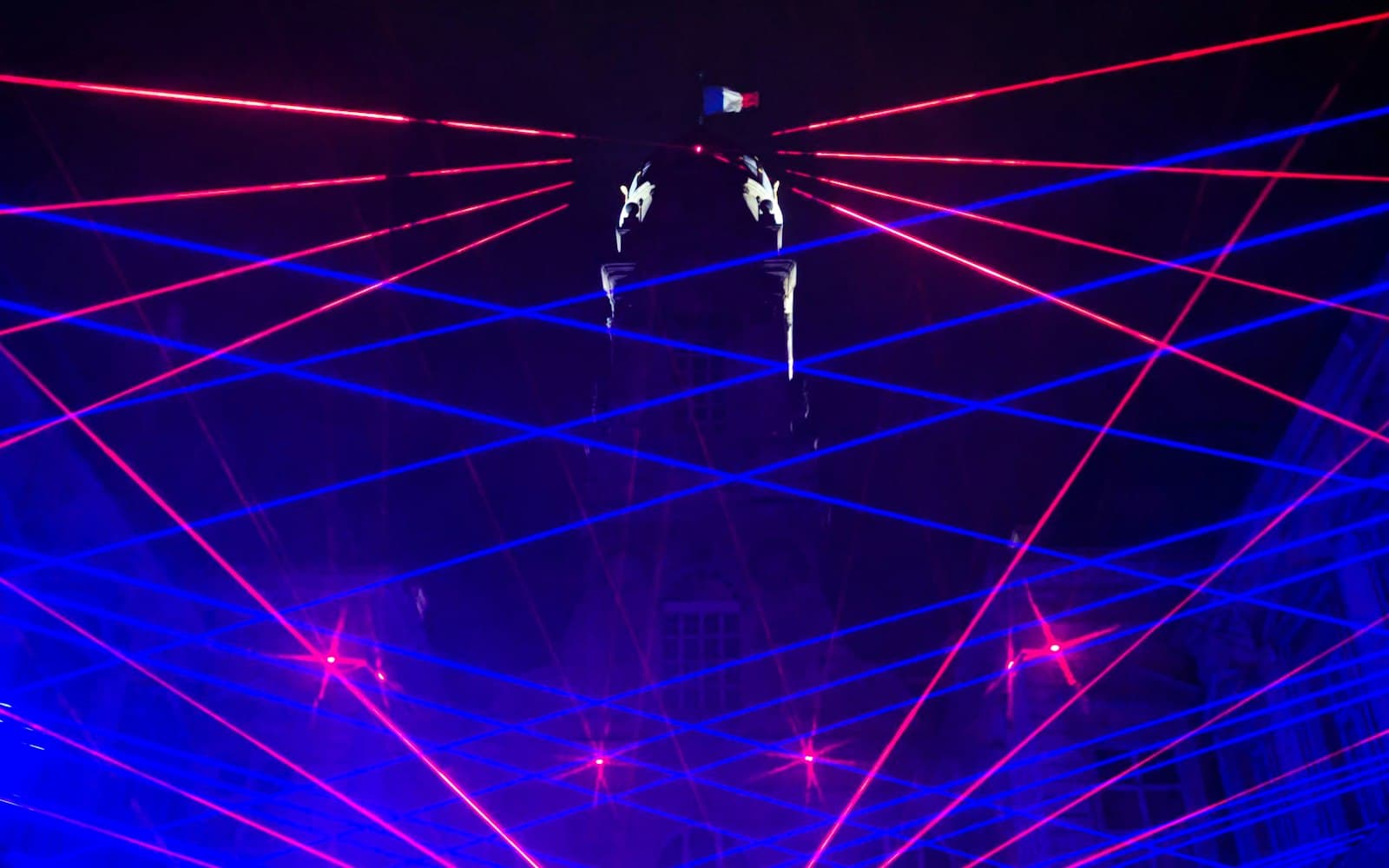
Outdoor laser shows carry extra requirements and need more lead time, especially in an area like Tampa Bay with several airports close to popular waterfront venues. An outdoor laser moment is possible, but it is not something to add the week before.
Indoors, the questions are simpler but still real: beam placement relative to guests' eyes, the operator's safety plan, and enough haze to make the beams visible at all. Without haze, a laser show is mostly dots on a wall.
Haze, fog, and the hotel smoke-detector problem
Haze is what turns lighting from “lights are on” into beams you can see across a room. It is the quiet workhorse of most of our productions, and it is also the effect most likely to set off a fire alarm if it is handled carelessly. Low-lying fog, the thick ground-level cloud used for a first dance, carries the same risk plus a floor that can get slick.
Hotels and larger venues usually have their own process for this, and it varies by property. None of it is difficult, but all of it has to be arranged in advance with the venue. An evacuated ballroom during the toasts is the one outcome nobody recovers from.
CO2, confetti, and the finale
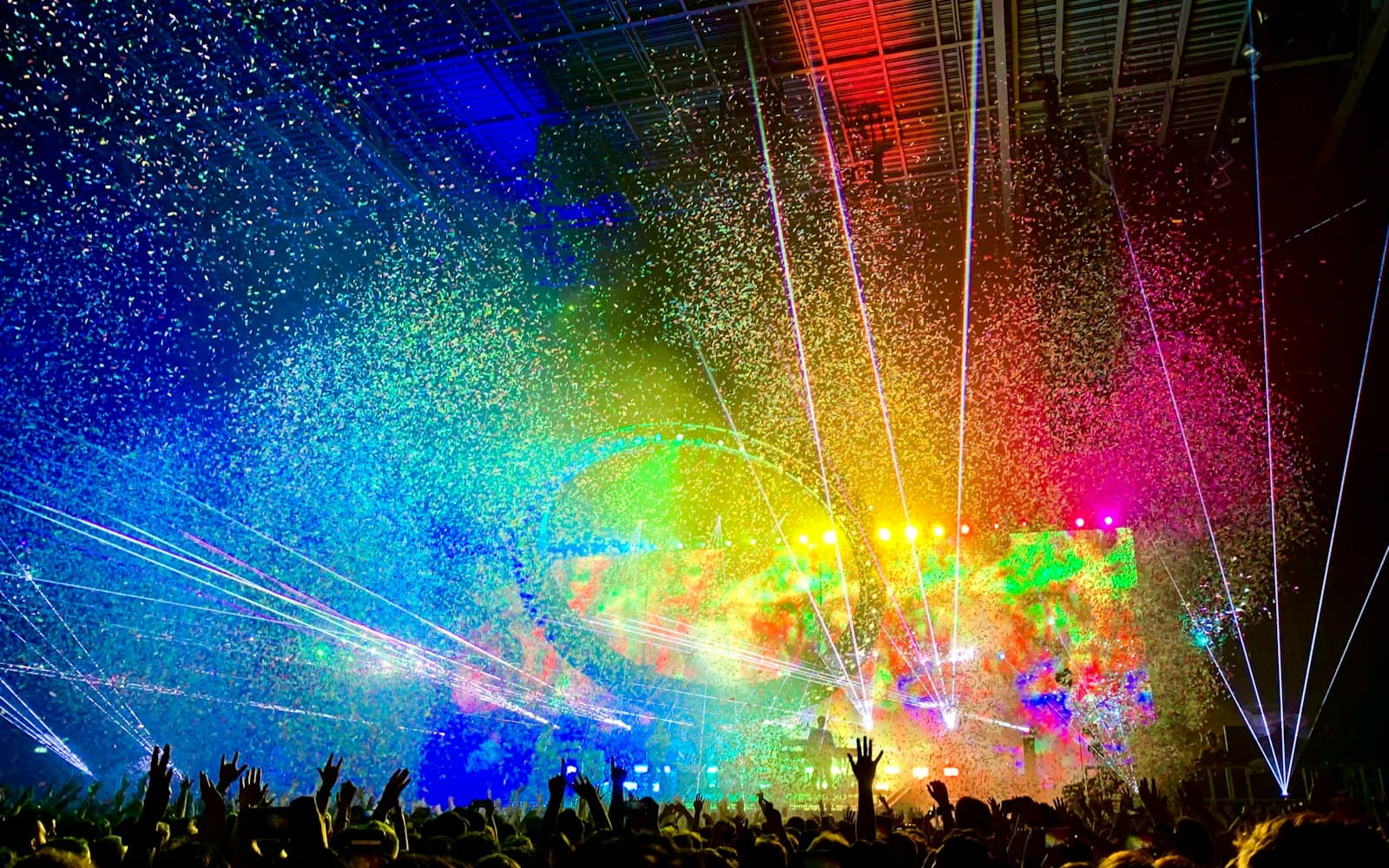
CO2 jets fire a fast, loud white plume that dissipates in seconds, and they are built for the drop in a dance set or the reveal at a corporate event. They need a trained operator, and they suit larger, well-ventilated rooms and outdoor stages better than small private dining rooms.
Confetti and streamers photograph beautifully and create the biggest cleanup conversation of any effect. Many venues restrict them or charge for cleanup, and waterfront and outdoor venues are often stricter because confetti blows into the water and the landscaping. “Biodegradable” helps, but it does not mean a venue has to allow it. Ask first.
True pyrotechnics belong mainly to festival stages and large outdoor finales. They involve licensed operators and local approvals, and they are a very different project from a pair of spark fountains. Our festival talent-buying guide covers how production fits into that kind of event.
“The effect is never the moment. The song is the moment. The effect is what tells everyone in the room that it has arrived.”
Designing the effect into the music, not on top of it
Here is where a production-and-talent team earns its keep. A cold spark cue that fires two bars early, or while the DJ is still talking, wastes the effect. Getting it right takes a few simple decisions made ahead of time:
- Choose the exact point in the song. The final chorus, the key change, or the bass drop. Your wedding band or DJ should know the timestamp or the bar.
- Build a cue sheet. One shared document for the emcee, the band leader or DJ, the lighting operator, and the effects operator, with who calls the cue and what happens if the timing slips.
- Light for it. Sparks look best against a darker stage with warm backlight. The lighting plan should drop to meet the effect.
- Brief your photographer and videographer. They need to know where the units are and when the cue lands, or they'll be reframing while the best frame happens.
- Hold a safety zone. Planners and coordinators should know where guests can and can't stand during the cue.
When the band, DJ, lighting, and effects come from one partner, that coordination happens inside one team instead of across four vendors. That is the practical case for full-service event production, and it is how we build effects into weddings and corporate events.
What drives the cost of cold sparks and effects
We don't publish flat prices for effects, because the same “two spark machines for the first dance” can be a very different job in a Clearwater Beach resort ballroom than on a private lawn in South Tampa. What actually moves the number:
- Number of units and firings. Two fountains for one cue is a different job from a row of eight across a stage all night.
- Operator time. An operator is present from load-in through strike, not just for the thirty seconds of the effect.
- Venue and local requirements. Anything the venue or location requires can add to the cost.
- Indoor vs. outdoor. Outdoor effects add weather protection and power planning.
- Bundling with production. Effects added to a production we are already running share crew, power, and load-in, which is usually more efficient than a standalone rental.
When to book special effects in Tampa Bay
Raise effects early, ideally before you sign the venue contract, so the answer is in writing before you commit. After that, lock effects in at the same time as the rest of your production: sound, lighting, and staging. Outdoor lasers and anything that needs outside approval take the longest, and popular dates fill early, so earlier is always better. Our wedding band booking guide lays out the broader wedding timeline.
A quick checklist before you commit to cold sparks
- Has the venue approved the specific effect, in writing?
- Do you know whether your venue or location has any additional requirements?
- Is there a named operator, and has the production company sent a certificate of insurance?
- Has the venue agreed on a plan for smoke detectors?
- For outdoor effects: is there a weather call time and a covered backup?
- Is the cue locked to a specific point in a specific song, and does everyone have the cue sheet?
- Has the decor team kept draping, florals, and flammables clear of the units?
Plan your cold sparks and special effects with The Music Bureau
The Music Bureau is a Tampa-based entertainment and event production agency built by working musicians and talent buyers. We book pre-vetted bands, DJs, and musicians, and we design and run the production around them: sound, staging, lighting, LED visuals, lasers, cold sparks, CO2, haze, backline, and day-of coordination. We're licensed, bonded, and insured in Florida, and we respond to new inquiries promptly.
Tell us your date, your venue, and the moment you want to land. We'll tell you what the venue is likely to allow, what the effect needs, and how to cue it to the music. Start on our contact page, email Booking@bookmusicbureau.com, or call (813) 616-1707. Mail reaches us at PO Box 272853, Tampa, FL 33688.
Frequently asked questions
Are cold sparks allowed indoors at Tampa Bay wedding venues?
Many venues allow them, and many do not. It depends on the venue's own policy, its insurance carrier, the smoke and heat detection in the room, and the local fire authority. Ask your venue coordinator before you sign the venue contract, and get any approval in writing, including where the machines can sit and who operates them.
Do cold sparks need a permit or fire marshal approval in Tampa?
It depends on the venue and the location. Requirements are set locally and vary from place to place, so your production team should confirm what applies to your specific venue early in planning.
Can you use cold sparks outdoors or on the beach in Florida?
Outdoor use is possible, but wind, rain, and surface all matter. Waterfront and beach sites often have steady wind that pushes spark fall sideways, the machines are electrical and need to stay dry, and sand, dry grass, and loose decor change the safe placement. Outdoor effects need a weather call and a backup plan, the same as outdoor audio and lighting.
Will haze or cold sparks set off a hotel's fire alarm?
They can. Haze, fog, and the light residue from spark machines can trigger smoke detectors, especially the sensitive systems in hotels and ballrooms. Hotels and larger venues usually have a process for handling this, and it has to be arranged with the property in advance, never on the night.
How far in advance should we book cold sparks or lasers?
Raise effects before you sign the venue contract, then lock them in with the rest of your production. Outdoor lasers and anything that needs outside approval take the longest, so bring those up first. Popular dates fill early, so earlier is always better.